Hermeus is a defense aviation company focused on rapidly designing, building, and flight-testing high-Mach and hypersonic aircraft for national-security missions.
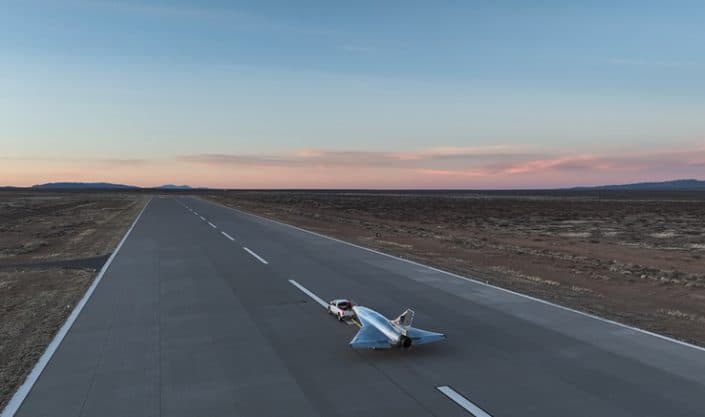
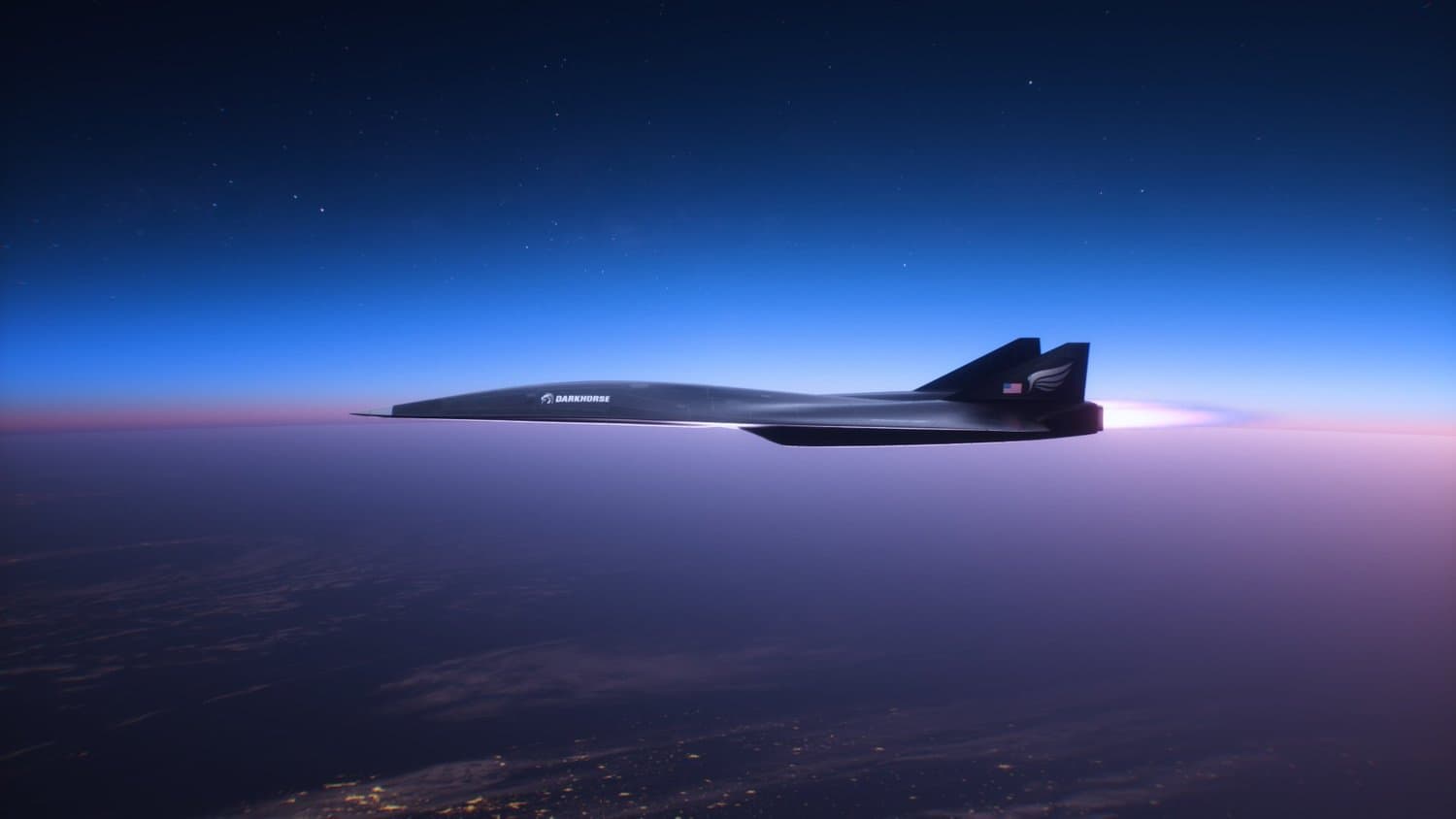
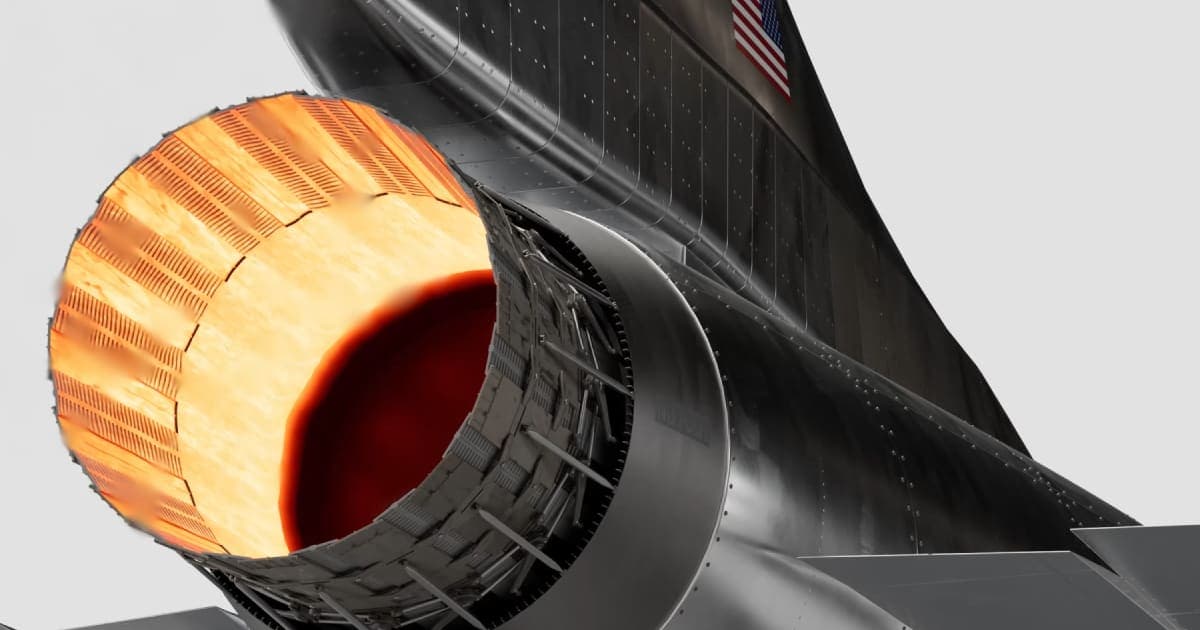
Its Quarterhorse program is progressing through a series of unmanned demonstrators to unlock high-speed flight - Mk 2.1 broke the sound barrier on May 26, 2026 in its third flight from Spaceport America, becoming the first privately-developed unmanned supersonic jet, then extended its top speed to Mach 1.6 on a fourth flight in mid-July 2026, beyond its previously announced design range of roughly Mach 1.25-1.50 - and the Chimera engine architecture underpins Darkhorse, the reusable hypersonic UAS Hermeus aims to field for defense customers. On September 9, 2026 the company unveiled Ramjet-X, a low-cost expendable ramjet vehicle launched from Quarterhorse for high-Mach Flight Test as a Service, with engine tests at HEAT in Jacksonville and integrated vehicle testing planned for 2027. On September 15, 2026 Pratt & Whitney licensed Hermeus to manufacture F100-PW-229 engines, creating a second U.S. production source for the fighter turbofan that already powers Quarterhorse and some F-15/F-16 variants; CEO Zach Shore said initial work will use existing footprints and that qualifying Pratt-standard builds comes before any demand-driven scale-up. A Federal Register notice published September 11, 2026 granted Mk 2.2 a special flight authorization for up to six supersonic test flights over White Sands through August 20, 2027 (effective August 20, 2026), though Hermeus has not yet announced a first flight. The company is now backed by a $1B post-money valuation, a $350M Series C closed in April 2026, and a Defense Innovation Unit contract scaled to a $219M ceiling in late May 2026 to demonstrate high-Mach flight and high-speed payload release at speeds up to Mach 3. In late July 2026, Quarterhorse Mk 2.1 completed its fifth flight overall and its first DIU-backed unmanned stores-separation test, safely releasing an external payload in flight. On September 3, 2026 Hermeus selected Anduril Lattice for Mission Autonomy on Quarterhorse Mk 2, with a first combined flight planned for 2027. In a May 2026 leadership transition effective June 1, 2026, president Zach Shore became CEO while co-founder AJ Piplica moved to executive chairman.
After the September 15, 2026 Pratt & Whitney Production License Agreement, Hermeus must qualify Pratt-standard F100-PW-229 builds before any demand-driven scale-up. CEO Zach Shore said initial manufacturing will use existing footprints and that Hermeus is becoming a second U.S. source for the engine that powers Quarterhorse and some F-15/F-16 variants, not a clean-sheet engine house. No production rate or start date has been disclosed.
The May 2026 $159M DIU contract modification - taking the program ceiling to $219M - commits Hermeus to a series of intensive 2026-2027 flight tests with the USAF and USN proving uncrewed Quarterhorse can hold high-Mach speeds while carrying and releasing payloads, the technical foundation for a Darkhorse-class operational system. Hermeus cleared the first concrete step in late July 2026, when Quarterhorse Mk 2.1's fifth flight completed an unmanned stores-separation test under DIU's HyCAT program, safely releasing an external payload; the campaign continues toward higher-Mach payload releases through 2027.
The FAA granted Mk 2.2 a special flight authorization published September 11, 2026 for up to six supersonic flights over White Sands through August 20, 2027. Hermeus's aircraft page lists Mk 2.2 for 2026 flight testing with a spike inlet, Gryphon engine and precooler above Mach 2, but a first-flight date has not been announced. Mk 2.3 is in active build for 2027 flight testing with high-temperature materials near Mach 3.
El Segundo HQ ramp and Atlanta production scale-up
The ~62,550 sq ft El Segundo headquarters at 888 North Douglas (a former Northrop Grumman campus) is expected to add more than 200 jobs over the next year as executive, design, and prototyping teams consolidate in California, with full occupancy expected in early 2027; the 175-person Atlanta facility is shifting toward production-rate assembly work for the growing Quarterhorse fleet. Careers still lists El Segundo as headquarters, with a Hawthorne mailing address at 3401 Jack Northrop Ave.
The High Enthalpy Air-breathing Test (HEAT) facility at Cecil Airport in Jacksonville - a ~$135M investment expected to create 100+ jobs over the decade - is being built in phases toward continuous high-Mach vitiated-air ground testing of the F100 and Chimera engines. The first phase came online with sea-level static F100 tests in January 2025; as of September 2026 the site is also running Ramjet-X engine tests. The site is also intended to base high-Mach Quarterhorse flight-test operations into the Eastern Range.
After unveiling Ramjet-X on September 9, 2026, complete ramjet-engine testing at the HEAT facility in Jacksonville and high-temperature structures work in El Segundo, then run integrated vehicle tests in 2027 with Quarterhorse carrying the expendable ramjet to release speed and altitude. The platform is also the basis for Hermeus's planned high-Mach Flight Test as a Service offering.
Fly Quarterhorse with Anduril Lattice mission autonomy
Hermeus selected Anduril on September 3, 2026 to put Lattice for Mission Autonomy on Quarterhorse Mk 2, the first third-party Group 5 airframe to carry the stack. Integration is underway; the companies plan the first mission-autonomy test flight in 2027.
With supersonic flight achieved on May 26, 2026 and FAA clearance in hand for up to seven supersonic flights through year-end, Hermeus's next gate is steadily widening Mk 2.1's envelope toward Mach 3 in 2027 while bringing Mk 2.2 and Mk 2.3 online to push higher in the high-Mach regime. Mk 2.1 extended its top speed to Mach 1.6 on a fourth flight in mid-July 2026 (its fifth flight, in late July, was a stores-separation test rather than a speed record).
Hermeus's aircraft roadmap now dates a multipurpose high-Mach Mission Plane and a Chimera II-powered Mk 3 (in-flight turbine-to-ramjet transition) to 2028, with a Mk 4 hypersonic TBCC demonstrator in 2029 and Darkhorse as the reusable operational UAS beyond that.
Hermeus said on September 9, 2026 it is developing Ramjet-X, a low-cost expendable ramjet-powered vehicle designed to launch from its reusable Quarterhorse aircraft into sustained high-Mach flight. The company plans to offer high-Mach Flight Test as a Service so customers can fly payloads, sensors, autonomy and propulsion hardware without a one-off booster for every shot. Engine tests are under way at the HEAT facility in Jacksonville, high-temperature structures are in work in El Segundo, and integrated vehicle testing is planned for 2027.
Hermeus selected Anduril on September 3, 2026 to integrate Lattice for Mission Autonomy on the Quarterhorse Mk 2 high-Mach drone, the first commercial deal to put Anduril's autonomy stack on a third-party Group 5 aircraft. The companies said integration is underway and the first mission-autonomy test flight is planned for 2027, pairing Lattice with an airframe that has already flown supersonic under a Defense Innovation Unit contract. Anduril called the pact a chance to validate end-to-end autonomy on an independent high-speed platform as it also competes for the Air Force Collaborative Combat Aircraft software layer.
The Defense Innovation Unit announced on July 31, 2026 that Hermeus's Quarterhorse Mk 2.1 successfully released an external payload in flight during a HyCAT (Hypersonic and Compressed-Cycle Advanced Technology) test, the aircraft's fifth flight since spring 2026 and a step toward validating a weapons-carrying role. DIU's contract with Hermeus was expanded by $159M in 2026 to a $219M ceiling, funding additional high-speed flight demonstrations and payload-separation tests through 2027.
Hypersonic aircraft developer Hermeus appointed Zach Shore as chief executive officer effective June 1, with founding CEO AJ Piplica transitioning to executive chairman. The leadership change comes as Hermeus advances its uncrewed Quarterhorse Mk 2.1 - billed as the world's first privately developed unmanned supersonic jet, which has flown to Mach 1.21 - and develops the larger Darkhorse, for which it has accepted its first Pratt & Whitney F100 engine to integrate into its Chimera II turbine-based combined cycle propulsion system. The company has won a $159 million Defense Department contract exploring military applications of its high-speed technology.
Hermeus said its Quarterhorse Mk 2.1 test aircraft hit Mach 1.21 (~930 mph) on its third flight from Spaceport America over the White Sands Missile Range, making it the first privately-developed unmanned aircraft to break the sound barrier and, by Hermeus's claim, the fastest unmanned jet flying today. The milestone came 364 days after Hermeus's Mk 1 maiden flight and roughly three months after Mk 2.1's first flight, validating the iterative build cadence behind the company's path to its Mach 5 Darkhorse military UAS.
(development stage); $219M DIU program ceiling for high-Mach flight + payload-release demos
Total Capital Raised
>$500M
Post-Money Valuation
$1B
Employees
~300 (175 in Atlanta + LA scale-up)
Quarterhorse First Flights
2 completed
(Mk 1 in May 2025, Mk 2.1 in February 2026); Mk 2.2 FAA-cleared for up to 6 supersonic flights through Aug 20, 2027, first flight not yet announced
Quarterhorse Top Speed
Mach 1.6
Mk 2.1, 4th flight, mid-July 2026
DIU Contract Ceiling
$219M
after May 2026 $159M modification
Quarterhorse Mk 2.1 Flights Completed
5
3rd flight: Mach 1.21 supersonic breakthrough, May 2026; 4th flight: Mach 1.6 top speed, mid-July 2026; 5th flight: DIU HyCAT stores-separation/payload-release test, late July 2026
F100 Production License
Licensed Sept 15, 2026 to manufacture Pratt & Whitney F100-PW-229 engines as a second U.S. source (Quarterhorse plus F-15/F-16 demand); no rate or start date disclosed
06
Operations & revenue
Operating status
Development Stage
Quarterhorse Mk 2.1 broke the sound barrier at Mach 1.21 from Spaceport America on May 26, 2026 - Hermeus's third Quarterhorse flight overall and the first privately-developed unmanned supersonic jet - then extended its top speed to Mach 1.6 on a fourth flight in mid-July 2026, beyond its previously announced Mach 1.25-1.50 design range. The FAA has cleared up to seven supersonic flights for Mk 2.1 through year-end. A Federal Register notice published September 11, 2026 granted Mk 2.2 a special flight authorization for up to six supersonic test flights over White Sands through August 20, 2027; Hermeus's roadmap lists Mk 2.2 for 2026 flight testing with a spike inlet, Gryphon engine and precooler above Mach 2, but a first-flight date has not been announced. On September 15, 2026 Pratt & Whitney licensed Hermeus to manufacture F100-PW-229 engines as a second U.S. production source, with initial work in existing footprints pending Pratt qualification. The DIU contract was scaled to a $219M ceiling in late May 2026 to fund high-Mach flight and high-speed payload-release demonstrations across 2026-2027, and in late July 2026 Mk 2.1 flew its fifth flight overall, an unmanned stores-separation test under DIU's HyCAT program that safely released an external payload in flight. On September 3, 2026 Hermeus selected Anduril Lattice for Mission Autonomy on Quarterhorse Mk 2, with a first combined flight planned for 2027. The company's aircraft page now lists a 2028 Mission Plane and Mk 3 (Chimera II mode transition), a 2029 Mk 4 hypersonic TBCC demonstrator, and Darkhorse beyond that. Headquarters remain in El Segundo, with Atlanta shifting toward production and HEAT in Jacksonville running F100 and Ramjet-X engine tests, under CEO Zach Shore (effective June 1, 2026).
Revenue streams
U.S. Government Contracts
Hermeus' near-term business is centered on U.S. government and national-security work while it matures Quarterhorse, Darkhorse, and its propulsion stack, including its Defense Innovation Unit HyCAT contract and a role supplying Quarterhorse aircraft to Kratos Defense's Navy/Missile Defense Agency MACH-TB hypersonic testbed program.
Licensed F100 Engine Manufacturing
Under a September 15, 2026 Pratt & Whitney Production License Agreement, Hermeus is authorized to manufacture F100-PW-229 engines as a second U.S. source for Quarterhorse and for F-15/F-16 demand. Pratt said the F100 family has more than 32 million flight hours. No production rate or start date has been disclosed; CEO Zach Shore said Hermeus must first qualify Pratt-standard builds, then scale with demand, and is not becoming a clean-sheet engine manufacturer.
High-Mach Flight Test as a Service (planned)
Ramjet-X, unveiled September 9, 2026, is intended as a low-cost expendable ramjet launched from reusable Quarterhorse so customers can test payloads, sensors, communications, autonomy, materials and propulsion in sustained high-Mach conditions. Integrated vehicle testing is planned for 2027.
Darkhorse Military UAS (future)
Potential future program revenue from Darkhorse, a reusable hypersonic unmanned aircraft for defense and national-security missions. Technology is being de-risked through Quarterhorse and Chimera II development.
Halcyon Commercial Airliner (future)
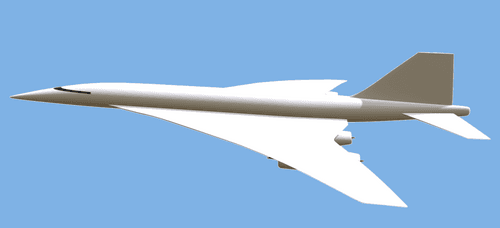
Long-term passenger-aircraft opportunity built around the same high-speed technology stack. It remains secondary to the company's defense aircraft roadmap.
07
Timeline24
2026
Pratt & Whitney licenses Hermeus to manufacture F100-PW-229 engines
On September 15, 2026 Pratt & Whitney (an RTX business) and Hermeus announced a Production License Agreement authorizing Hermeus to manufacture F100-PW-229 engines, creating a new U.S. production source for the fighter turbofan that powers Quarterhorse and some F-15 and F-16 variants. Pratt said the F100 family has logged more than 32 million flight hours. CEO Zach Shore said Hermeus becomes a vertically integrated airframer for Quarterhorse, that initial production will use existing footprints, and that qualifying Pratt-standard builds comes before any demand-driven scale-up; he said Hermeus is not becoming a clean-sheet engine manufacturer.
FAA clears Quarterhorse Mk 2.2 for supersonic flight tests
A Federal Register notice published September 11, 2026 granted Hermeus a special flight authorization to exceed Mach 1 with Quarterhorse Mk 2.2, effective August 20, 2026. The authorization covers up to six daytime supersonic test flights at or above 24,000 ft over White Sands Missile Range restricted airspace through August 20, 2027. Hermeus's aircraft roadmap lists Mk 2.2 for 2026 flight testing with a spike inlet, Gryphon engine, and precooler, targeting speeds above Mach 2, but the company has not announced a first-flight date.
Unveils Ramjet-X high-Mach expendable test vehicle
On September 9, 2026 Hermeus announced Ramjet-X, a low-cost expendable ramjet-powered vehicle designed to launch from its reusable Quarterhorse aircraft into sustained high-Mach flight rather than relying on a dedicated expendable booster for every test. The company said it will offer high-Mach Flight Test as a Service so customers can integrate payloads, sensors, communications, autonomy, materials and propulsion hardware onto Ramjet-X. Engine tests are under way at the HEAT facility in Jacksonville, high-temperature structures are in development at El Segundo, and integrated vehicle testing is planned for 2027.
Selects Anduril Lattice for Quarterhorse mission autonomy
On September 3, 2026 Hermeus selected Anduril to integrate Lattice for Mission Autonomy on Quarterhorse Mk 2, the first commercial deal putting Anduril's autonomy stack on a third-party Group 5 aircraft. Integration is underway and the first mission-autonomy test flight is planned for 2027, pairing Lattice with an airframe that has already flown supersonic under a Defense Innovation Unit contract. Anduril also said Hermeus will soon fly its second aircraft, Mk 2.2, built in under a year.
Quarterhorse Mk 2.1 completes DIU stores-separation test
In its fifth flight since spring 2026, Quarterhorse Mk 2.1 completes an unmanned stores-separation flight test under the Defense Innovation Unit's HyCAT program, safely releasing an external payload in flight - a pace DIU says is about four times faster than typical hypersonic test programs and a concrete step toward the $219M contract's high-Mach payload-release goal.
Sameer Rao named CFO
On July 22, 2026, Hermeus appoints Sameer Rao, a 30-year hardware finance veteran and former CFO of battery maker Enevate with prior finance leadership roles at MaxLinear and Broadcom, as chief financial officer to build out the operational foundation for delivering aircraft at scale following the $350M Series C.
Quarterhorse Mk 2.1 extends top speed to Mach 1.6
On a fourth flight in mid-July 2026, Quarterhorse Mk 2.1 pushes its top speed to Mach 1.6, beyond the upper end of its previously announced design speed range of roughly Mach 1.25-1.50, about a week before its fifth flight under the DIU's HyCAT program.
Zach Shore named CEO; Piplica becomes executive chairman
On May 11, 2026 Hermeus announces a leadership transition effective June 1, 2026: president Zach Shore becomes chief executive officer while co-founder AJ Piplica moves to executive chairman, where he focuses on capital strategy, the board, and investor and customer relationships as the company scales Quarterhorse flight testing toward production.
2026
DIU contract scaled to $219M for high-Mach payload demos
Two days after the supersonic milestone, Hermeus announces on May 28, 2026 a $159M modification from the Defense Innovation Unit that raises the program's total ceiling to $219M - one of the largest awards in DIU history. Together with the U.S. Air Force and U.S. Navy, the company commits to a series of intensive 2026-2027 flight tests demonstrating high-Mach flight and high-speed payload release with the Quarterhorse family.
Quarterhorse Mk 2.1 breaks the sound barrier
On its third test flight from Spaceport America over the White Sands Missile Range on May 26, 2026, Quarterhorse Mk 2.1 reaches Mach 1.21 (~930 mph), becoming the first privately-developed unmanned supersonic jet and, per Hermeus, the fastest unmanned aircraft flying today. The flight comes 364 days after Mk 1's maiden flight and roughly three months after Mk 2.1's first flight.
Kim Nakamaru named General Counsel
On April 14, 2026, Hermeus appoints Kim Nakamaru as General Counsel and a member of the Executive Leadership Team. Nakamaru joins from Relativity Space, where she served as General Counsel and a member of the executive team, and brings more than 15 years advising public and private companies, including a decade in aerospace, aviation, and advanced manufacturing.
$350M Series C and new El Segundo HQ
Hermeus closes a $350M Series C financing that brings total capital raised to over $500M and says it will expand its prototyping footprint with a new headquarters in El Segundo while shifting the Atlanta site toward production.
FAA clears Quarterhorse Mk 2.1 flight campaign
The FAA grants Quarterhorse Mk 2.1 a Special Airworthiness Certificate in the experimental category, allowing Hermeus to continue progressively higher-altitude and higher-speed testing toward supersonic flight.
Quarterhorse Mk 2.1 first flight
The F-16-sized Quarterhorse Mk 2.1 completes its maiden flight at Spaceport America, giving Hermeus its second successful first flight in less than a year and opening a supersonic flight-test campaign.
Zachary Shore named President; Steve Furger named CTO
On January 26, 2026, Hermeus appoints Zachary Shore as president and promotes Steve Furger, a nine-year SpaceX veteran who joined Hermeus in 2022 as director of flight sciences, to chief technology officer - a leadership build-out ahead of the Quarterhorse supersonic flight-test campaign.
2025
Quarterhorse Mk 1 first flight
The Quarterhorse Mk 1 completes its maiden flight at Edwards Air Force Base, marking Hermeus's first successful flight test.
HEAT engine test facility comes online
Hermeus brings the first phase of its High Enthalpy Air-breathing Test (HEAT) facility at Cecil Airport in Jacksonville online, completing sea-level static tests of the Pratt & Whitney F100 engine roughly three months after breaking ground - a step toward the facility's later phases of continuous high-Mach vitiated-air testing for the F100 and Chimera engines.
2022
Chimera turbojet-to-ramjet transition achieved
The Chimera turboramjet engine successfully transitions from turbojet to ramjet mode during testing at the Notre Dame Turbomachinery Lab, a critical milestone for Mach 5 propulsion.
$100M Series B and ABMS selection
Hermeus raises $100M led by Sam Altman with Founders Fund and In-Q-Tel. The company is selected for the USAF Advanced Battle Management System (ABMS) contract with a $950M ceiling.
2021
$60M USAF Quarterhorse contract
The U.S. Air Force awards Hermeus a $60M contract to build and fly three Quarterhorse prototype aircraft and develop reusable hypersonic propulsion technology.
NASA Space Act Agreement
Hermeus signs a Space Act Agreement with NASA for collaborative research on high-speed aircraft technologies.
2020
First USAF contract
The U.S. Air Force awards Hermeus a $1.5M SBIR Phase II contract to study a Mach 5 aircraft concept for Presidential and Executive Airlift.
Chimera engine prototype demonstrated
Hermeus demonstrates a subscale Chimera engine prototype, validating the turbojet-to-ramjet transition concept that is core to its Mach 5 propulsion strategy.
2018
Founded
AJ Piplica, Glenn Case, Mike Smayda, and Skyler Shuford found Hermeus in Atlanta, Georgia, with the mission of radically accelerating air travel through hypersonic flight.
08
Funding
$685Mdisclosed across 5 rounds with a stated amount
Cumulative disclosed raise · dated rounds
RoundAmountInvestors
Seed
2019
Undisclosed
Khosla Ventures
Series A
2020
$16M
Canaan Partners, Khosla Ventures, Bling Capital
Series B
2022
$100M
Sam Altman, Founders Fund, In-Q-Tel, Khosla Ventures, Canaan Partners
Series C
2026
$350M
Khosla Ventures-led; continued backing from Canaan Partners, Founders Fund, RTX Ventures, Bling Capital, and In-Q-Tel, plus new investors including Cox Enterprises/Socium Ventures and Destiny Tech100; financing also includes debt capital from Silicon Valley Bank, Pinegrove Venture Partners, Hercules Capital, and Trinity Capital
USAF Contract
2021
$60M
U.S. Air Force
DIU Contract Extension
May 2026
$159M modification (program ceiling $219M)
Defense Innovation Unit (with USAF and USN partners)