Active
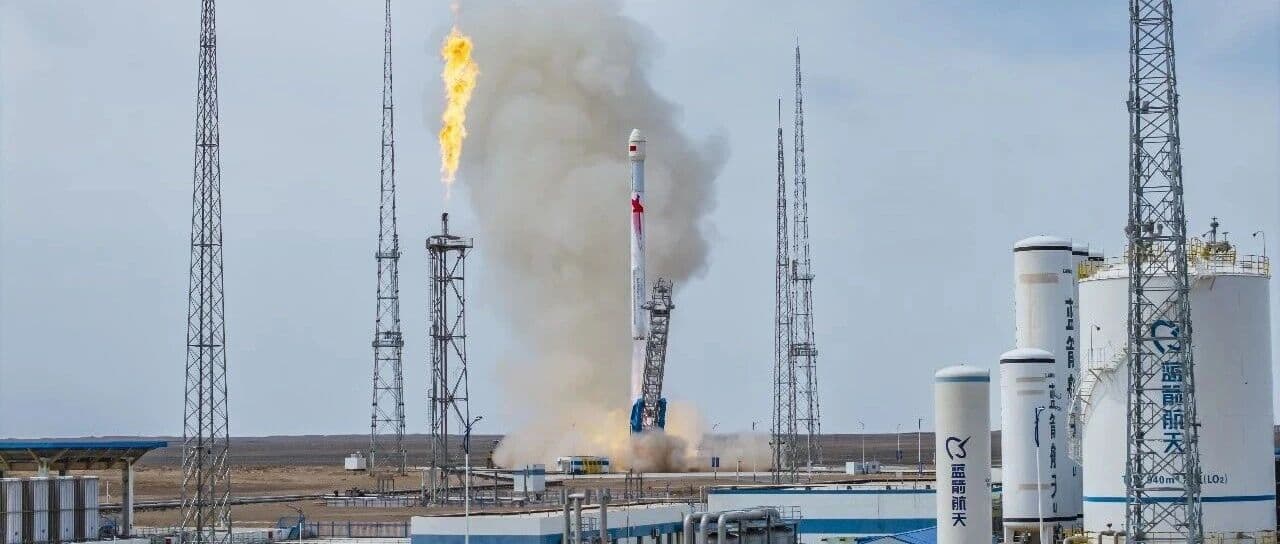
Zhuque-2 / Zhuque-2E
Two-stage methane-liquid oxygen medium-lift rocket; the first methalox launch vehicle in the world to reach orbit. The stretched Zhuque-2E variant adds payload performance for commercial missions.
LandSpace (Beijing LandSpace Technology) is China's leading commercial rocket company and, through satellite affiliate Hongqing Technology, a would-be constellation operator.
Latest update Oct 15, 2026
01
In July 2023 its methane-liquid oxygen Zhuque-2 became the first methalox rocket in the world to reach orbit, and the company now flies the upgraded Zhuque-2E for commercial constellation missions. On September 15, 2026 Zhuque-2E Y7 placed 10 Qianfan Polar Orbit Group 19 satellites into a roughly 900 km orbit - the ninth Zhuque-2-family flight and the first large-scale satellite-internet constellation deployment by a Chinese private rocket. On October 14, 2026, Zhuque-2E Y4 lifted off at 19:40 Beijing time from the same Dongfeng pad and placed 10 satellites in their planned orbits. LandSpace's newsroom names them as ADA Space Xingshidai-39 and Xingshidai-44 through 50, plus Lanta Intelligent Guangchuan-03 and Guangchuan-04, and calls the mission the 10th Zhuque-2-series flight. Y4 is the vehicle serial, not the flight count: Y7 on September 15 was already the ninth series flight, so this lower serial flew later. Its flagship is the reusable, stainless-steel Zhuque-3, a Falcon 9-class vehicle whose December 2025 maiden flight reached orbit but failed to recover its booster; on its second orbital flight on August 18, 2026, Zhuque-3 delivered the demo Honghu-03 satellite to orbit and completed China's first-ever landing of a private orbital-class rocket booster, joining SpaceX and Blue Origin as the third company to land an orbital booster on legs, though residual propellant ignited shortly after touchdown and the resulting fire damaged the landing-gear area and collapsed the stainless-steel stage. LandSpace says it still aims to refurbish and reuse a recovered first stage within about six months, pointing to around February 2027. The Y7 and October 14 Y4 posts both say Zhuque-3 engineering reuse verification continues. Payload reported on September 4, 2026 that LandSpace is the farthest along of China's commercial rocket firms in the STAR Market queue after that landing. The company refiled an updated STAR Market prospectus on June 29, 2026, returning the Shanghai review to 'inquiry' status, and for the first time projected reaching profitability by 2029 (premised on Zhuque-3 mass production and routine reuse). That refiling disclosed LandSpace's first full-year 2025 results - revenue of 52.10 million yuan (~$7.2M, up about 11x year over year) against a widening net loss of 1.71 billion yuan (~$240M, up about 95% YoY) - and the company still seeks to raise about 7.5 billion yuan (~$1.1B). Its STAR Market share-issuance terms imply a post-listing valuation near 75 billion yuan (~$10.4B). Satellite affiliate Hongqing Technology, LandSpace's largest-shareholder constellation play, closed a Pre-B round of more than 1.3 billion yuan (~$191M) on July 2, 2026 and has filed the 10,000-satellite Honghu-3 constellation with the ITU.
landspace.comUpdated Oct 15, 2026
02
2026
Target2026 (no confirmed date)
Launch AVIC/Chengdu Aircraft Design Institute's reusable Haolong cargo spaceplane to the Tiangong space station on a Zhuque-3, one of two low-cost-cargo concepts China Manned Space Engineering Office selected in October 2024 (the other pairs CAS Space with a Microsat spacecraft). LandSpace has said it expects to begin Tiangong cargo missions in 2026, but no specific launch date has been officially announced as of September 20, 2026. The company newsroom's latest items remain the September 15 Zhuque-2E Y7 Qianfan flight and the August 19 Zhuque-3 landing recap, with no new Haolong schedule.
2026-2027
Convert the Shanghai STAR Market filing into a completed public listing, raising roughly 7.5 billion yuan. LandSpace refiled an updated prospectus on June 29, 2026, returning the review to 'inquiry' status, projecting profitability by 2029 for the first time, and disclosing full-year 2025 results (52.10 million yuan revenue, a 1.71 billion yuan net loss, and an accumulated deficit near 4.84 billion yuan). The share-issuance terms imply a listing valuation near 75 billion yuan (~$10.4B), well above the 20.7 billion yuan (~$2.9B) private valuation set in an April 2025 capital increase. Payload reported on September 4, 2026 that LandSpace is the farthest along of China's commercial rocket firms in the STAR Market queue after the August 18 Zhuque-3 landing, still racing CAS Space to become China's first publicly listed commercial-space company, with proceeds funding Zhuque-3 production and reusability work. No listing date has been set.
2026-2027
Sustain the Zhuque-2E launch tempo after Y7 on September 15, 2026 placed 10 Qianfan Polar Orbit Group 19 satellites into a roughly 900 km orbit - the ninth Zhuque-2-family flight and the first large-scale satellite-internet constellation deployment by a Chinese private rocket, ending a three-month gap after Y6 (June 9). LandSpace said Zhuque-2E is now in regular commercial service for constellation work while Zhuque-3 engineering reuse verification continues. As of September 20, 2026 the company newsroom still lists Y7 as the latest launch, with no Y8 or later Qianfan/Guowang batch announced.
Feb 2027
Move from having verified booster-recovery technology on Zhuque-3's second flight (a successful August 18, 2026 landing, though a post-touchdown propellant fire damaged the landing-gear area and the recovered stage toppled several hours after landing) to engineering-scale reuse verification - refurbishing and reflying a recovered first stage - as LandSpace works toward routine reusability needed to hit its 2029 profitability target. The company says it aims to refly a recovered booster within about six months of the landing, pointing to around February 2027 rather than the fourth-quarter-2026 target floated immediately after touchdown; given the fire and toppling damage, officials have acknowledged full-stage reflight may require lengthy repair, and that reflying undamaged components (engines, grid fins) to prove multi-use capability is a fallback path if the stage itself cannot be repaired in time. No specific reflight date has been confirmed.
03
On Oct. 14, 2026, LandSpace's Zhuque-2E Y4 lifted off at 7:40 p.m. Beijing time from the Dongfeng commercial space innovation pilot zone and placed 10 satellites into their planned orbits, Xinhua reported. Global Times said the flight was the 10th for the Zhuque-2 series and carried eight ADA Space Star Compute satellites plus two Lanta Intelligent laser-communication test satellites. ADA Space said the computing satellites will test in-orbit foundation-model training, a 10-kilowatt-class liquid cooling loop, and laser links.
Days after LandSpace's Zhuque-3 became the first privately built Chinese orbital-class booster to land on legs, residual methane and liquid oxygen ignited near its base on the recovery pad, burning the landing-gear area until the stainless-steel stage toppled over. LandSpace says the landing itself still counts as a successful proof of its recovery technology and it aims to refurbish and refly a recovered stage within months, targeting a first Zhuque-3 reflight around Q4 2026.
LandSpace's Zhuque-3 launched its second orbital mission on August 18 from the Dongfeng Commercial Space Innovation Test Zone at Jiuquan and successfully landed its first stage on legs, China's first-ever recovery of a private orbital-class rocket booster and the country's first successful booster landing on land. The mission arrived well ahead of the no-earlier-than August 31 estimate set after an August 10 postponement, and LandSpace says it now moves from recovery-technology verification to engineering-scale reuse.
LandSpace's planned August 10-11 second launch and first-stage catch attempt of its reusable Zhuque-3 rocket was postponed following the explosion of an unrelated CASC Long March 7A rocket at the Wenchang Space Launch Site on August 10. Launch trackers now list a new no-earlier-than target of August 31, 2026 from the Dongfeng pad at Jiuquan; neither LandSpace nor Chinese state media has given an official cause for the postponement or a confirmed new date.
LandSpace is targeting August 10 for its second orbital launch and first-stage catch attempt of the reusable Zhuque-3 rocket, with liftoff and landing planned for around 7:45 p.m. EDT (early morning August 11 in Beijing) from the Dongfeng pad at Jiuquan. The company's first Zhuque-3 flight in December 2025 reached orbit, but the booster exploded during its final descent toward the pad; this attempt follows a June 29 nine-engine static fire and would be China's fourth attempt at recovering an orbital booster, after the Long March 10B's successful landing on July 10.
LandSpace and CAS Space each refiled updated STAR Market IPO prospectuses on June 29, both setting a 2029 profitability target for the first time, contingent on higher launch cadence and mature reusable-rocket technology. LandSpace's filing disclosed its first full-year 2025 results (52.10 million yuan revenue against a 1.71 billion yuan net loss), as the two Chinese rocket makers race to become the country's first publicly listed commercial-launch company.
LandSpace completed a full-duration static fire of its reusable Zhuque-3 Y2 first stage on June 29 at the Dongfeng commercial pad at Jiuquan. The stage's nine Tianque-12A methalox engines ignited in sequence and fired for about 45 seconds with gimbal-control testing, producing roughly 7,542 kN of thrust. The company said both rocket and launch-site systems performed normally and that it will now proceed toward the maiden orbital flight of the Falcon 9-class vehicle.
LandSpace's Zhuque-2E Y6 rocket lifted off from the Dongfeng Aerospace Innovation Pilot Zone on June 9, successfully delivering the SpaceSail DTC 01 and China Mobile 02 satellites to their designated orbits - the eighth successful mission for the Zhuque-2 methane rocket family. The flight extends LandSpace's commercial launch cadence as China's leading private methalox operator while the company pursues its STAR Market IPO and works toward full first-stage recovery on the larger Zhuque-3.
04
Two-stage methane-liquid oxygen medium-lift rocket; the first methalox launch vehicle in the world to reach orbit. The stretched Zhuque-2E variant adds payload performance for commercial missions.
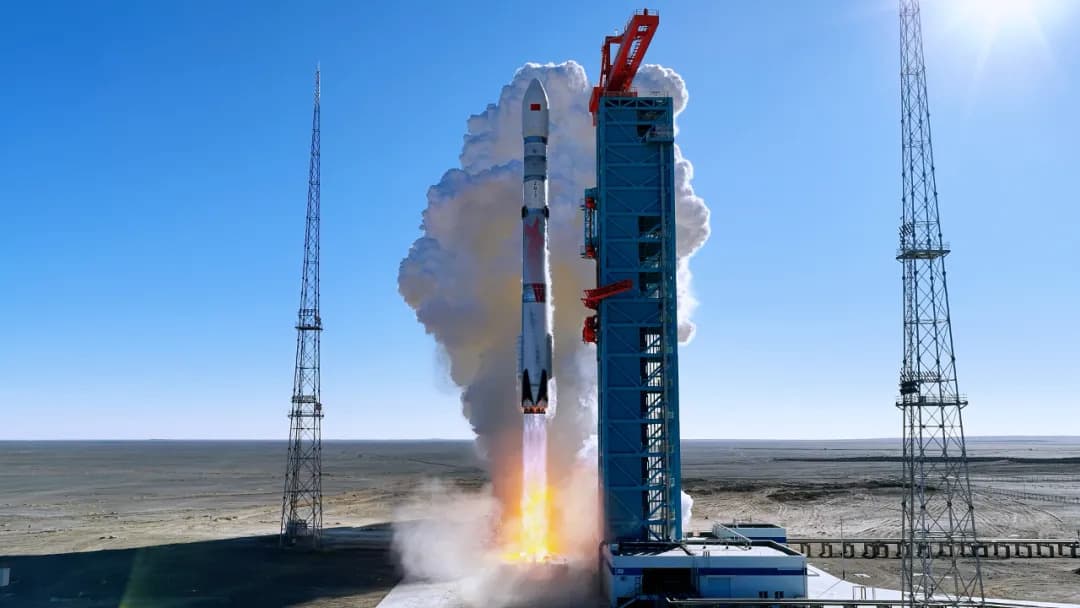
Two-stage, stainless-steel, methane-liquid oxygen rocket with a reusable first stage; LandSpace's Falcon 9-class vehicle aimed at low-cost, high-cadence launch. An enhanced Zhuque-3E variant is in development.
05
The refiled STAR Market prospectus (June 29, 2026) disclosed LandSpace's first full-year 2025 results: revenue of 52.10 million yuan (~$7.2M), up roughly 11x year over year on Zhuque-2E commercial launch cadence, against a net loss of 1.71 billion yuan (~$240M, up about 95% YoY) as R&D spending rose to 922 million yuan. Accumulated deficit stood at about 4.84 billion yuan (~$677M) as of mid-2025. Three-year cumulative losses (2023-2025) reached about 3.8 billion yuan (~$560M), and the debt-to-asset ratio climbed to 54.99% in 2025 despite more than 7 billion yuan raised to date - a sign of how capital-intensive scaling reusable launch has been ahead of profitability. LandSpace projects profitability by 2029, contingent on Zhuque-3 mass production and routine first-stage reuse. Payload's September 4, 2026 recap restated the same 2025 figures (52M yuan revenue, 1.71B yuan net loss) with no later financial disclosure.
(20.7B yuan private, April 2025 capital increase); STAR Market share-issuance terms imply a post-listing valuation near $10.4B-$11.1B (75B yuan, depending on exchange rate used)
updated prospectus refiled June 29, 2026; seeking ~7.5B yuan (~$1.1B); profitability projected by 2029. Payload reported Sept 4, 2026 that LandSpace is the farthest along of China's commercial rocket firms in the STAR Market queue after the August 18 Zhuque-3 landing; the Sept 15 Zhuque-2E Y7 Qianfan mission does not change that status, and no listing date has been set.
06
Operating status
Operational; Zhuque-2E Y4 orbited 10 named satellites
On Oct. 14, 2026 Zhuque-2E Y4 lifted off at 19:40 Beijing time from LandSpace's methalox pad at the Dongfeng commercial space innovation pilot zone and placed 10 satellites in their planned orbits. The company newsroom (item 78) names all 10: ADA Space Xingshidai-39 and Xingshidai-44 through 50, plus Lanta Intelligent Guangchuan-03 and Guangchuan-04, and calls the mission the 10th Zhuque-2-series flight. Y4 is the vehicle serial, not the flight count. Zhuque-2E Y7 on Sept. 15, 2026 remains the ninth series flight, so this lower serial flew after Y5, Y6 and Y7. Xinhua reported a complete success. Global Times also calls it the 10th series flight and says it came 29 days after the previous Zhuque-2E launch. Spaceflight Now's English serials are XSD-39 and XSD-44 through 50, and LT-03 and LT-04. The reusable Zhuque-3 booster landing on Aug. 18, 2026 remains the latest recovery result. STAR Market status, Wikipedia and a full 15-page audit were not reopened.
Commercial methalox launches for Chinese satellite operators and mega-constellation deployment from Jiuquan Satellite Launch Center. Zhuque-2E Y7 on September 15, 2026 was the first large-scale Qianfan batch flown by a Chinese private rocket (10 Polar Orbit Group 19 satellites).
Zhuque-3 Reusable Launch Services
Planned medium-to-heavy reusable launch services targeting low-cost, high-cadence deployment for China's satellite-internet constellations once recovery and reuse are proven. Zhuque-3 is already on China SatNet's core-supplier list for the Guowang constellation and holds a roughly 300 million yuan (~$44.2M) Shanghai Yuanxin Satellite contract to launch 18 Qianfan constellation satellites in a single mission.
Hongqing / Honghu satellite manufacturing
Through affiliate Hongqing Technology (LandSpace is the largest shareholder at about 48%), LandSpace is building a Starlink-style rocket-plus-satellite stack: flat-panel LEO broadband satellites at a Xiong'an plant targeting 100-500 units a year, plus the filed 10,000-satellite Honghu-3 constellation. Hongqing closed a Pre-B of more than 1.3 billion yuan (~$191M) on July 2, 2026.
07
How past announced dates turned out.
1/3announced dates hit on time
Zhuque-3 second orbital flight and first booster recovery
Target NET 2026-08-31 · Resolved Aug 18, 2026
Zhuque-3 flew its second orbital mission on August 18, 2026 from the Dongfeng Commercial Space Innovation Test Zone at Jiuquan, delivered the demo Honghu-03 satellite to orbit, and landed its first stage on legs, China's first successful recovery of a private orbital-class rocket booster and the country's first booster landing on land - well ahead of the NET August 31 estimate set after the August 10 postponement. Shortly after touchdown, residual propellant ignited a fire that burned the landing-gear area and caused the stainless-steel stage to collapse. LandSpace still counts the flight as a success for the recovery technology and says it moves it from recovery-technology verification toward engineering-scale reuse, targeting a first reflight around Q4 2026.
Zhuque-3 second orbital flight and first booster recovery
Target August 10-11, 2026 · Resolved Aug 10, 2026
The firm August 10-11, 2026 launch window from Jiuquan was postponed at the last moment. Chinese media reported the postponement followed the unrelated failure of a CASC Long March 7A carrying the ChinaSat 4B satellite, which broke up roughly 85 seconds after liftoff from Wenchang on the evening of August 10; LandSpace itself gave no official cause. Launch trackers subsequently listed a no-earlier-than August 31, 2026 date, but LandSpace flew and landed the booster on August 18, well ahead of that estimate - see the 'hit' entry below.
Zhuque-3 second orbital flight and first booster recovery
Target Q2 2026 · Resolved Jul 22, 2026
LandSpace's second Zhuque-3 flight and first land-recovery attempt slipped past its original Q2 2026 target and a subsequent 'after mid-July' window without launching; following a June 29 nine-engine static fire, launch trackers now list a no-earlier-than late-August 2026 date (NET August 31). The flight remains upcoming - see the current nextSteps entry.
08
2026
Zhuque-2E Y4 orbits 10 named satellites
On Oct. 14, 2026 at 19:40 Beijing time, Zhuque-2E Y4 lifted off from LandSpace's methalox pad at the Dongfeng commercial space innovation pilot zone and placed 10 satellites into their planned orbits. The company newsroom names every satellite: ADA Space Xingshidai-39 and Xingshidai-44 through Xingshidai-50, and Lanta Intelligent Guangchuan-03 and Guangchuan-04. LandSpace says this is the 10th flight of the Zhuque-2 series. Y4 is the vehicle serial, not the flight sequence. Zhuque-2E Y7 on Sept. 15, 2026 was the ninth series flight, so Y4 flew after Y5 on May 14, Y6 on June 9 and Y7. Xinhua reported a complete success and described the eight ADA Space satellites as the 02 group of the Star Compute plan. Global Times said the launch came 29 days after the previous Zhuque-2E flight. Spaceflight Now labels the same payloads XSD-39, XSD-44 through XSD-50, LT-03 and LT-04.
Zhuque-2E Y7 flies first private large-scale Qianfan deployment
On September 15, 2026 at 14:26 Beijing time, Zhuque-2E Y7 lifted off from the Dongfeng Commercial Space Innovation Pilot Zone and placed 10 Qianfan Polar Orbit Group 19 satellites into a roughly 900 km orbit - the ninth Zhuque-2-family flight and the first large-scale satellite-internet constellation deployment by a Chinese private rocket company. LandSpace said Zhuque-2E is now in regular commercial service and that it continues Zhuque-3 engineering reuse verification.
Hongqing Technology raises 1.3B yuan Pre-B for Honghu-3 constellation
On July 2, 2026, LandSpace satellite affiliate Hongqing Technology (LandSpace is the largest shareholder, about 48%) closes a Pre-B round of more than 1.3 billion yuan (~$191M), taking its cumulative financing above 2.5 billion yuan (~$368M). Hongqing builds flat-panel, stackable LEO broadband satellites at a Xiong'an plant targeting 100-500 satellites a year and in May 2024 filed the Honghu-3 constellation - 10,000 satellites across 160 planes - with the ITU, China's third 10,000-plus constellation filing after Guowang and Qianfan. Payload reported on September 4, 2026 that the raise, together with Zhuque-3's August landing, puts the LandSpace-Hongqing pair at the front of China's commercial-space listing and constellation queue.
Zhuque-3 lands its booster on second orbital flight
On August 18, 2026, Zhuque-3 lifts off from the Dongfeng Commercial Space Innovation Test Zone at Jiuquan, delivers the demo Honghu-03 satellite (built by LandSpace's satellite subsidiary Hongqing Technology) to orbit, and lands its first stage using landing legs after descent, China's first-ever recovery of a private orbital-class rocket booster and the country's first successful booster landing on land. The mission arrives well ahead of the NET August 31 estimate that followed an August 10 postponement. Shortly after touchdown, residual propellant ignited a fire that burned the landing-gear area and caused the stainless-steel stage to collapse; LandSpace, which had made landing-burn and thermal-protection changes after the December 2025 debut, says it still moves from recovery-technology verification toward engineering-scale reuse and aims to refurbish and refly a recovered stage within months.
220-ton 'Lanyan' engine completes long-duration test, eyeing a future heavy-lift rocket
LandSpace's self-developed Lanyan (BF-20), a 220-ton-class methane-liquid oxygen engine using a full-flow staged-combustion cycle (the same architecture as SpaceX's Raptor), completes a long-duration, full-system hot-fire campaign in March 2026, passing 100 cumulative ignitions since its first full-system test in mid-2025. The engine is intended to power a future LandSpace heavy-lift, reusable launch vehicle beyond Zhuque-3; no vehicle name or timeline has been announced.
IPO valuation gap surfaces; Country Garden's exit confirmed
Follow-up analysis of the refiled prospectus highlighted a large valuation gap: LandSpace's April 2025 capital increase, bringing in two new investors (Zhongying Fuya and Junyuxingtu), valued the company at about 20.7 billion yuan (~$2.9B), while the STAR Market share-issuance terms (issuing at least 10% of post-IPO shares to raise ~7.5B yuan) imply a listing valuation near 75 billion yuan (~$10.4B). The same reporting confirmed that Country Garden's investment arm sold its entire roughly 11% stake for 1.305 billion yuan in that April 2025 round and no longer holds any LandSpace equity.
Refiles STAR Market prospectus, projects profitability by 2029
On June 29, 2026 LandSpace submitted an updated prospectus to the Shanghai Stock Exchange, returning its STAR Market IPO review to 'inquiry' status. For the first time the filing set a profitability target - 2029 - contingent on Zhuque-3 reaching mass production, routine first-stage reuse and a sharp increase in launch cadence. The refiled prospectus also disclosed LandSpace's first full-year 2025 results: revenue of 52.10 million yuan (~$7.2M, up about 11x year over year) against a net loss of 1.71 billion yuan (~$240M, up about 95% YoY), R&D spending of 922 million yuan, and an accumulated deficit near 4.84 billion yuan, as LandSpace and rival CAS Space race to become China's first publicly listed commercial-space company (seeking ~7.5B yuan and ~4.18B yuan respectively).
Nine-engine Zhuque-3 static fire ahead of second flight
On June 29, 2026, LandSpace completed a full-duration static fire of a reusable Zhuque-3 (Y2) first stage at the Dongfeng commercial pad at Jiuquan. The stage's nine Tianque-12A methalox engines ignited in sequence and burned for about 45 seconds with gimbal-control testing, producing roughly 7,542 kN of thrust; the company said rocket and launch-site systems performed normally and that it would proceed toward the next Zhuque-3 flight - the follow-up to the December 2025 debut that reached orbit but did not recover its booster.
2026
Zhuque-2E Y6 completes eighth Zhuque-2 mission
On June 9, 2026, the Zhuque-2E Y6 lifts off from the Dongfeng Aerospace Innovation Pilot Zone at 4:23 p.m. Beijing time and successfully delivers the SpaceSail DTC 01 and China Mobile 02 satellites to their designated orbits - the eighth mission for the Zhuque-2 rocket family. LandSpace said the two-stage cryogenic vehicle is 3.35 meters in diameter with 6 tonnes to LEO and 4 tonnes to a 500 km sun-synchronous orbit. Y7 later flew on September 15, 2026 as the ninth family flight, so Y6 remains the last two-satellite commercial mission before the first large Qianfan batch.
Zhuque-2E proves stretched configuration
On May 14, 2026, an upgraded Zhuque-2E (Y5) with lengthened tanks, subcooled propellant loading and a three-ignition second stage places a 2,800 kg constellation-deployment test payload into a 900 km polar orbit.
2025
STAR Market IPO filing accepted
The Shanghai Stock Exchange accepts LandSpace's STAR Market IPO application, which seeks to raise about 7.5 billion yuan (~$1.07B); the company was valued near 20 billion yuan (~$2.7B) in mid-2025.
Zhuque-3 reusable maiden flight
On December 3, 2025, the reusable stainless-steel Zhuque-3 reaches orbit on its debut, but an abnormal combustion event during descent prevents the first-stage booster from landing.
Signs Zhuque-3 launch contracts for China's megaconstellations
LandSpace's Zhuque-3 is selected for China SatNet's core-supplier list for the state-backed Guowang constellation and wins Shanghai Yuanxin Satellite's 2025 Launch Vehicle Launch Service Procurement Project, covering a single-launch deployment of 18 Qianfan (Thousand Sails) satellites. The Yuanxin contracts and supplementary agreements, signed in November and December 2025, total about 300 million yuan (~$44.2M) - the first time a launch vehicle outside state-owned CASC's Long March family has been contracted for either megaconstellation.
2024
2023
2018
2015
09
$3.8Bdisclosed across 3 rounds with a stated amount
Cumulative disclosed raise · dated rounds
Venture funding
2015-2024
HongShan (Sequoia China), China SME Development Fund, Country Garden, and others
Pre-IPO valuation
2025
Per Hurun Global Unicorn Index 2025
STAR Market IPO (under review)
2025-2026
Shanghai Stock Exchange (STAR Market); updated prospectus refiled June 29, 2026, review at 'inquiry' stage
Strategic investment (capital increase)
2025-04
~150M yuan (~$21M) combined from two new investors
Zhongying Fuya (~100M yuan) and Junyuxingtu (~50M yuan), implying a ~20.7B yuan (~$2.9B) valuation; Country Garden's investment arm concurrently sold its entire ~11% stake (1.305B yuan, ~$182M) and no longer holds any LandSpace equity