
Wisk Aero
Sebastien Vigneron
Data verified as of Jul 17, 2026
Summary
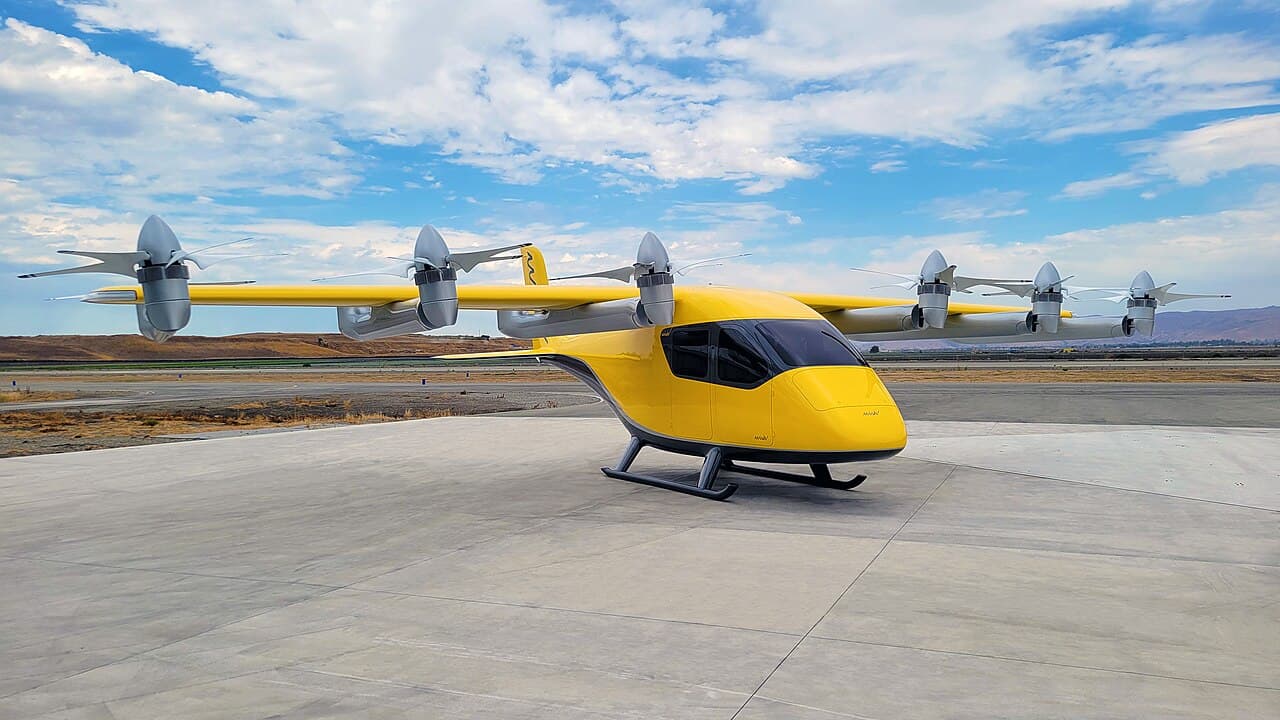
Wisk Aero is Boeing's wholly-owned autonomous air taxi subsidiary, pursuing the industry's most distinctive strategy: skipping piloted service entirely. Its Generation 6 aircraft — the first candidate for FAA type certification of an autonomous eVTOL — carries four passengers with no pilot aboard, flown by onboard automation under ground-based multi-vehicle supervisors. Formed in 2019 as a Boeing–Kitty Hawk joint venture carrying forward the Cora program (Boeing took full ownership in 2023), Wisk has flown 1,750+ test flights across six aircraft generations. Gen 6 made its first flight in December 2025, a second aircraft joined the certification campaign in May 2026, and in March 2026 Wisk and Texas were selected under the White House-backed eIPP to lead the introduction of autonomous air taxi flight in the U.S. Launch markets are Houston, Los Angeles, and Miami around 2030, with Brisbane targeted by the 2032 Olympics.
Main Products
What's Next
Expand Gen 6 flight envelope to transition flight
The certification campaign is building out the hover regime with two aircraft, then progresses to longitudinal transition — the shift from vertical lift to wing-borne cruise — followed by higher speeds and altitudes. The two-aircraft fleet doubles the test rate, and additional Gen 6 airframes are expected to join the campaign.
Begin phased eIPP operations in Texas
With TxDOT, SkyGrid, and the Texas Center for Advanced Air Transportation, Wisk's three-phase eIPP program moves from foundation flights to dedicated integrated routes and ultimately high-frequency Gen 6 operations — real-world autonomous operations with air traffic control that feed FAA rulemaking for autonomous passenger flight.
FAA type certification and autonomous service entry
Wisk targets type certification of Gen 6 and entry into commercial autonomous air taxi service around 2030, launching in Houston, Los Angeles, and Miami, with South East Queensland targeted by the Brisbane 2032 Olympics. Wisk is in FAA Stage 3 compliance demonstration, and the regulatory framework for autonomous passenger flight is being developed in parallel through the eIPP.
Operations & Revenue
Wisk is in the certification flight-test phase, with two Gen 6 prototypes flying at Hollister, California since December 2025 and May 2026. The campaign is expanding through the hover regime ahead of transition flight. Wisk is in FAA Stage 3 (compliance demonstration) following Stage 2 G-1 issue papers in fall 2024, targeting type certification and commercial service around 2030. It anchors the federal eIPP in Texas and is validating multi-aircraft supervised autonomy with NASA, with a 1:3 supervisor-to-aircraft ratio demonstrated in simulation in July 2026.
Revenue Streams
Autonomous Air Taxi Service (planned)
Wisk intends to both manufacture and operate its autonomous air taxi service — a departure from Boeing's traditional aircraft-sales model — targeting $3.00 per passenger-mile in launch markets Houston, Los Angeles, and Miami, followed by Brisbane and Kaga, Japan.
Key Metrics
Timeline
On March 9, 2026, Wisk and the Texas Department of Transportation are selected under the White House-backed DOT/FAA eVTOL Integration Pilot Program to lead the safe introduction of autonomous air taxi flight — a three-phase program running from foundation flights to high-frequency Gen 6 operations, feeding FAA rulemaking for autonomous passenger flight.
The second Generation 6 aircraft flies for the first time on May 4, 2026 at Hollister, doubling Wisk's certification flight-test capacity. In July, Wisk and NASA demonstrate in high-fidelity simulation that a single ground supervisor can safely manage three autonomous aircraft under IFR in controlled airspace.
Sebastien Vigneron becomes CEO in May 2025, succeeding Brian Yutko. In June, airspace-management software company SkyGrid becomes a Wisk subsidiary, and Wisk signs MOUs with the Miami-Dade Aviation Department and University of Miami, plus Japan Air Lines Engineering and the city of Kaga, Japan.
On December 16, 2025, the first Generation 6 aircraft completes its maiden flight at Wisk's Hollister, California flight test facility — vertical takeoff, hover, and stabilized flight — kicking off the certification flight-test campaign, which expands through the hover regime before transition and higher speeds and altitudes.
Partners with the Houston Airport System to bring autonomous air taxis to the Greater Houston region and signs a Sugar Land, Texas agreement for vertiport infrastructure and a regional route network. Expands its Skyports partnership to define an entry-into-service network in South East Queensland, Australia by the Brisbane 2032 Olympics.
Boeing buys out Kitty Hawk's stake, making Wisk a wholly-owned subsidiary. Wisk flies the first public demonstration of an autonomous eVTOL at EAA AirVenture Oshkosh in July, then begins test flights at Long Beach Airport — the first eVTOL company to fly in greater Los Angeles alongside commercial airline traffic.
Boeing invests $450 million in January 2022 to fund development and certification of Wisk's sixth-generation aircraft. In October, Wisk unveils Gen 6 — a four-passenger autonomous eVTOL presented as the world's first candidate for type certification of an autonomous eVTOL.

Partners with the New Zealand government to trial the fully self-flying Cora in a national airspace integration program, and joins NASA's Advanced Air Mobility work on autonomous flight — a relationship later formalized as a five-year Space Act Agreement.