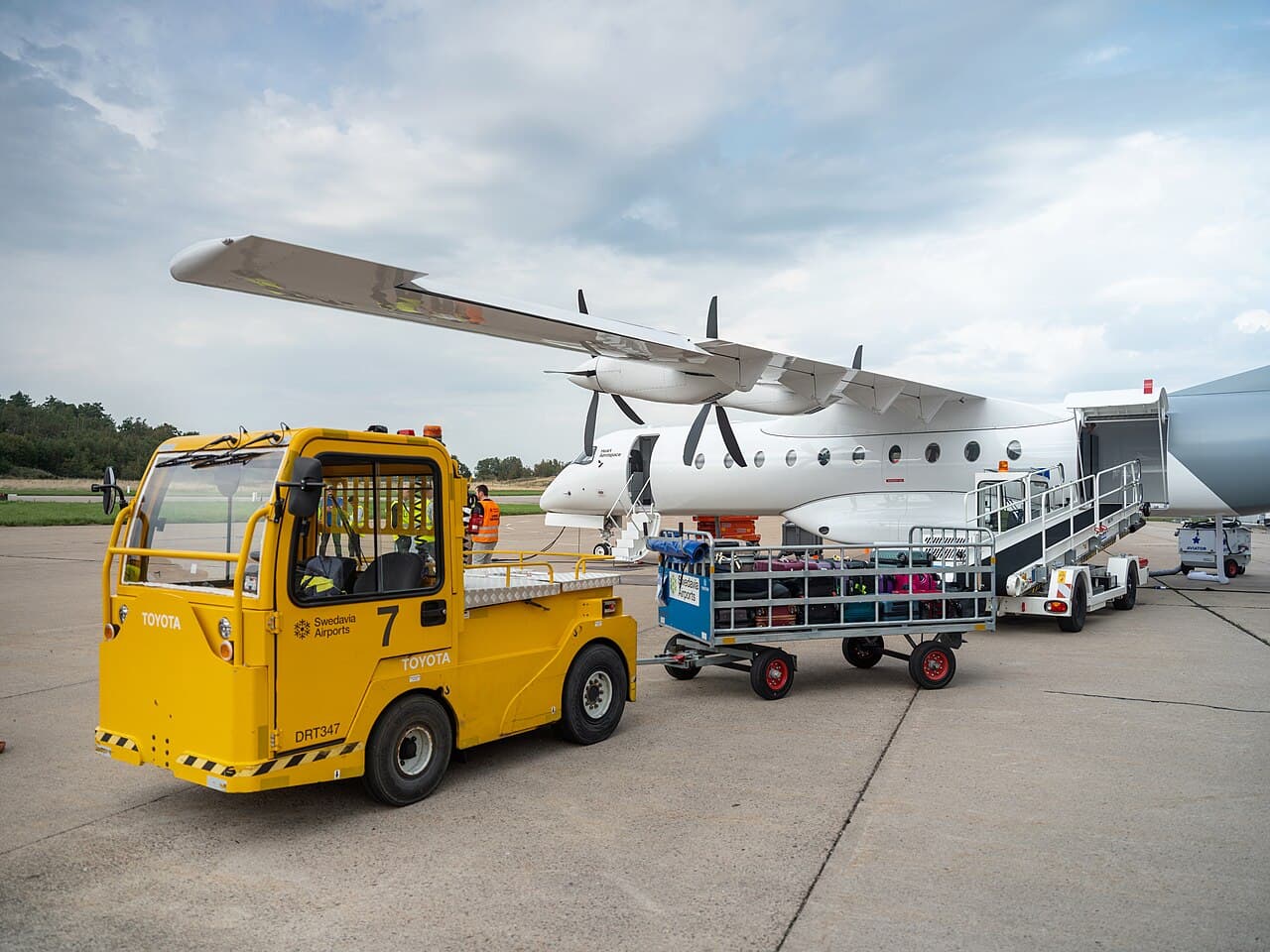
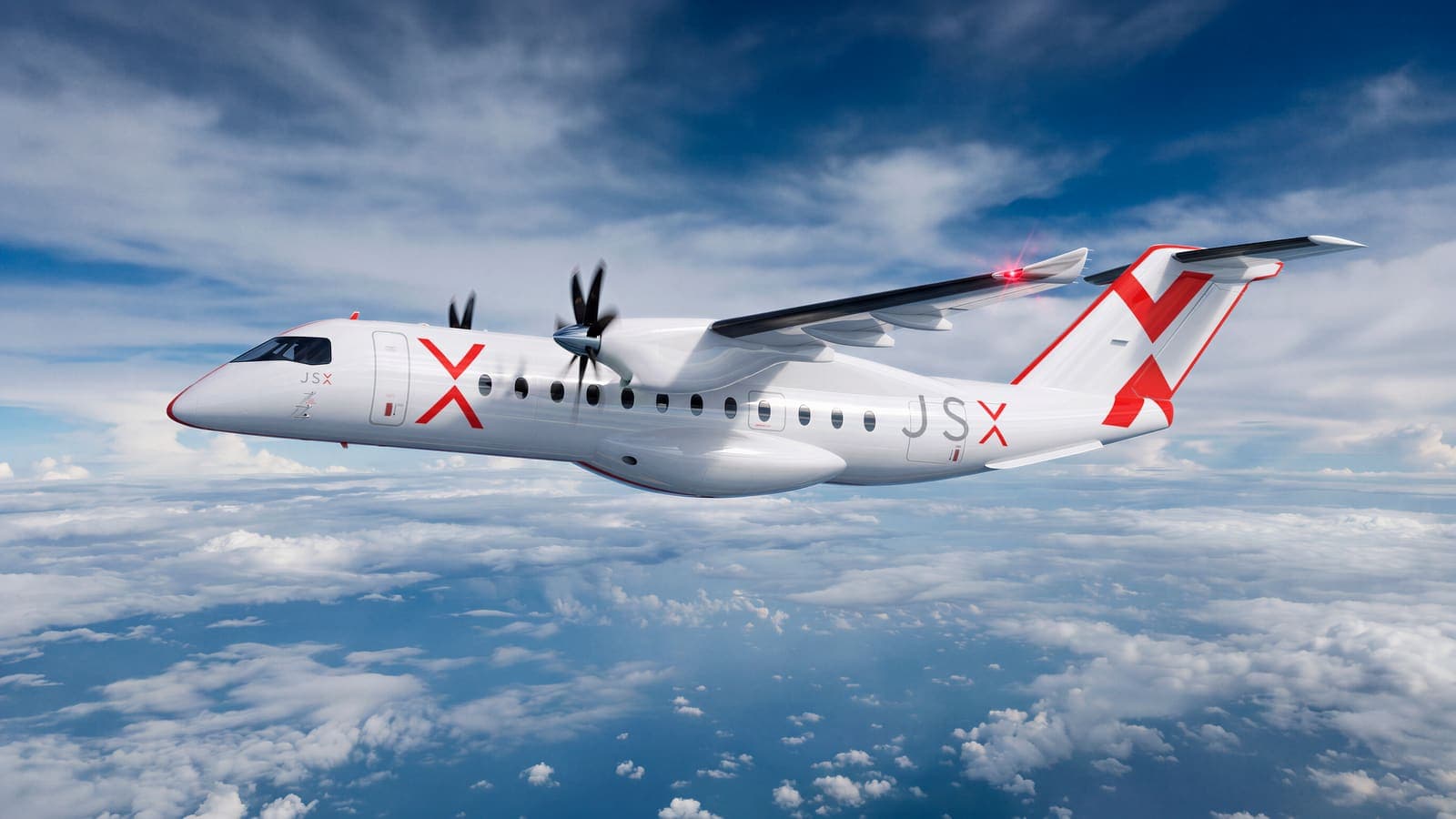
Heart Aerospace is developing the ES-36, a 36-seat clean-sheet hybrid-electric regional aircraft that is now the company's production design after the ES-30.
Founded in Sweden and headquartered in Torrance, California, Heart flew the all-electric X1 demonstrator on August 12, 2026, a 27-minute flight that made X1 the largest battery-electric aircraft ever flown. On September 23, 2026 Heart unveiled the ES-36 and said JSX signed a deposit-backed purchase agreement for 50 aircraft with rights for 50 more. Heart is building the first pre-production ES-36 at its Los Angeles Pilot Plant, targeting first flight in the second half of 2028 and FAA Part 25 certification and entry into service in 2031. The company still cites $190M in mission-aligned capital and more than $9 billion in customer commitments from United, Air Canada, JSX and others; United, Mesa and Air Canada have not publicly converted prior ES-30 orders to the ES-36.
With the all-electric X1 having completed its piloted maiden flight on August 12, 2026, Heart's next major flight-test milestone is a hybrid-electric demonstration originally described as the X2 prototype. Heart's August 13 first-flight release and current ES-30 page no longer mention a 2026 X2 flight; they say Heart is developing the first pre-production ES-30 at its Los Angeles Pilot Plant, with flight testing scheduled to begin in 2028. Key.aero reported on August 19 that the originally planned X2 is now referred to as that first pre-production ES-30. Wikipedia still lists a 2026 hybrid-electric demonstration target. Heart's newsroom has posted nothing after the August 13 first-flight release as of September 19, 2026, and the company has not announced an X2 flight.
Heart is building the first pre-production, type-conforming ES-30 at its Torrance / Los Angeles Pilot Plant, distinct from the X1 technology demonstrator. The company site and the August 13, 2026 first-flight release still target flight testing on this airframe in 2028, feeding the FAA Part 25 campaign.
Heart's ES-30 product page and X1 first-flight materials still list type certification and entry into service in 2031, after the earlier 2029 goal slipped. The schedule still hinges on flying the first pre-production, type-conforming ES-30 airframe from 2028.
Heart is positioning the ES-30 for commercial regional service with a stated $9.4B order book (United, Air Canada, JSX and others) and more than 40% lower operating cost versus legacy regional aircraft. The official ES-30 page still puts entry into service at 2031.
Heart Aerospace unveiled the ES-36, a 36-seat hybrid-electric regional airliner that becomes its production aircraft, evolving the earlier ES-30 with six more seats, 1,415 pounds more payload, a shorter 95-foot wingspan, and twin 1.65-megawatt series-hybrid powertrains. US public-charter carrier JSX converted its 2023 letter of intent into a deposit-backed purchase agreement for 50 ES-36s, with purchase rights for 50 more. Heart is building the first pre-production ES-36 at its Los Angeles plant, targeting first flight in the second half of 2028 and FAA Part 25 certification and entry into service in 2031.
Heart Aerospace flew its all-electric X1 demonstrator for the first time on August 12, 2026 at Plattsburgh International Airport in New York, under an FAA Special Airworthiness Certificate. The piloted 27-minute flight reached 1,100 feet and drew more than a megawatt from the battery-electric propulsion system, making X1 the largest electric aircraft ever flown. Heart says the milestone de-risks its planned 30-seat hybrid-electric ES-30 airliner, which has 250 aircraft orders plus 120 options and purchase rights from carriers including United and Air Canada.
Heart Aerospace's all-electric X1 demonstrator completed its first piloted flight on August 12 at Plattsburgh International Airport in New York, a 27-minute flight that reached 1,100 feet and drew over 1 megawatt of power from its propulsion system. At a 106-foot wingspan and more than 25,000 pounds takeoff weight, X1 became the largest battery-electric aircraft ever flown, a milestone feeding into Heart's 30-seat ES-30 regional airliner program, which is targeting type certification in 2031.
Heart Aerospace revised its type-certification target for the 30-seat hybrid-electric ES-30 regional airliner to 2031, a delay from its prior 2028-2029 goal, the company said around July 29, 2026. The company's order book stands at $9.4 billion, including 100-aircraft commitments each from United Airlines and Mesa Air Group and 30 firm from Air Canada, and it points to the newly FAA-cleared X1 demonstrator as validating technology feeding into the ES-30 program.
The FAA issued Heart Aerospace a Special Airworthiness Certificate in the experimental category on July 23, authorizing piloted flight testing of its X1 demonstrator at Plattsburgh International Airport in upstate New York. With a 106-foot wingspan and a takeoff weight above 25,000 pounds, the X1 becomes the largest electric aircraft ever cleared by the FAA for piloted flight. The demonstrator will validate the design and hybrid-electric technology behind Heart's planned ES-30 30-seat regional airliner, which carries an order book from customers including United, Air Canada and Mesa.
no commercial aircraft deliveries; company still in demonstrator and pre-production development
Total Funding Raised
$190M
Firm Orders
250 aircraft
United, Mesa, Air Canada, Rockton
Total Order Pipeline
~561 aircraft
250 firm + 120 options + 191 LOIs
ES-30 Hybrid Range
800 km (500 mi)
Order Book Value
~$9.4B in aggregate customer commitments
United, Air Canada, JSX and other launch customers
JSX ES-36 commitment
50 deposit-backed aircraft plus 50 purchase rights (announced Sept 23, 2026)
ES-36 hybrid range
745 miles (1,200 km) plus reserves
United, Mesa and Air Canada ES-36 conversions
Unpublished as of Sept 30, 2026
JSX remains the only named ES-36 conversion
ES-36 product image
Official 10-file media-bank kit published; not yet deployed to /products/
06
Operations & revenue
Operating status
Development Stage
Pre-revenue. As of October 20, 2026 Heart's newsroom tops at the October 12 release: Heart said the FAA awarded $2.9 million under CLEEN Phase IV, matched by Heart, for a $5.8 million, 24-month Project HYPER. The project ground-tests and then flies an ES-36 turbogenerator on the pre-production aircraft, and Heart still schedules that first flight in 2028. The release does not link an FAA award document, and no FAA award document was opened. JSX remains the only named ES-36 conversion in the prior record; United, Mesa and Air Canada sites were not rechecked this pass. The ES-30 is discontinued as of the September 23, 2026 ES-36 unveiling. Four leftover ES-30 steps are adopted here and still need a missed resolution.
Revenue streams
ES-30 Aircraft Sales (future)
Future aircraft sales backed by 250 firm orders from United Airlines (100), Mesa Air Group (100), Air Canada (30), and Rockton (20), plus 120 options and purchase rights and 191 letters of intent.
Infrastructure and Services (future)
Heart says it is building the related infrastructure and service layer needed to unlock the full market potential of regional electric aviation alongside the ES-30 aircraft program.
07
Track record
How past announced dates turned out.
1/2announced dates hit on time
1 Hit
1 Slipped
0 Missed
Hit
HX-1 all-electric first flight at Plattsburgh
Target 2026 · Resolved Aug 12, 2026
The all-electric X1 demonstrator completed its piloted maiden flight at Plattsburgh International Airport on August 12, 2026, a 27-minute flight that reached 1,100 feet AGL with the propulsion system delivering over 1 megawatt of power, making X1 the largest battery-electric aircraft ever flown.
Heart pushed its publicly stated ES-30 type-certification target out to 2031, citing the still-pending all-electric X1 maiden flight and the need to mature the X2 hybrid-electric prototype, even as its order book (backed by United, Mesa, Air Canada and Rockton) held at $9.4B.
On 12 October 2026 Heart said the FAA awarded $2.9 million under CLEEN Phase IV, matched by Heart, for a $5.8 million, 24-month project. Project HYPER will ground-test and then fly an ES-36 turbogenerator on the pre-production aircraft. Heart still schedules that first flight in 2028. The release does not link an FAA award document.
Unveils ES-36 production aircraft; JSX orders 50 with 50 rights
On 23 September 2026 Heart unveiled the ES-36 as its production aircraft and said US carrier JSX signed a deposit-backed purchase agreement for 50 ES-36s, with purchase rights for 50 more, converting a 2023 letter of intent. The 36-seat hybrid-electric design adds six seats and 1,415 pounds of payload versus the ES-30, uses twin 1.65-megawatt series-hybrid powertrains, and lists 125 miles all-electric range plus reserves and 745 miles hybrid range plus reserves. Heart is building the first pre-production ES-36 in Los Angeles, targeting first flight in the second half of 2028 and FAA Part 25 certification and entry into service in 2031.
Brittany Churchill named Chief Operating Officer
Heart's about page now lists Brittany Churchill as Chief Operating Officer, after her June 2025 appointment as Vice President of Operations. The executive team also includes CTO Benjamin Stabler and Chief of Staff Cole Randle, with the company identifying Torrance, California as headquarters and the Los Angeles Pilot Plant site.
X1 completes maiden flight, largest electric aircraft ever flown
On August 12, 2026 the all-electric X1 demonstrator completed its piloted maiden flight at Plattsburgh International Airport, a 27-minute flight reaching 1,100 feet AGL with the propulsion system delivering over 1 megawatt of power. At a 106-foot wingspan and more than 25,000 pounds takeoff weight, X1 became the largest battery-electric aircraft ever flown, advancing the technology feeding into the ES-30 program.
FAA clears X1 for piloted flight testing
On July 23, 2026 the FAA issued Heart a Special Airworthiness Certificate in the experimental category for the all-electric X1 demonstrator at Plattsburgh International Airport, authorizing piloted flight testing. With a 106-foot wingspan and a takeoff weight above 25,000 pounds, the X1 became the largest electric aircraft ever cleared by the FAA for piloted flight, clearing the final regulatory hurdle before its maiden flight.
X1 completes low-speed taxi testing at Plattsburgh
In late May 2026 Heart's all-electric X1 demonstrator completes low-speed taxi testing at its flight-test base at Plattsburgh International Airport in upstate New York - a key step in the ground-test campaign ahead of FAA special airworthiness certification and the aircraft's maiden flight, which the company still targeted for 2026 at the time. Heart's X1 page still lists the low-speed taxi test among the program's documented steps, and the aircraft went on to fly on August 12, 2026.
2025
Relocated HQ to California
Heart relocates its corporate headquarters from Gothenburg to Los Angeles, closes Swedish operations, and says the move will support upcoming Heart X1 experimental flights and the future Heart X2 prototype. The company also discloses a new $40M investment alongside the transition.
2024
HX-1 demonstrator unveiled
Heart Aerospace unveils the HX-1 (Heart X1), its first full-scale all-electric flight-test demonstrator aircraft, and selects Plattsburgh International Airport in New York for its first flight.
2024
$107M Series B and ES-30 redesign
Raises $107M Series B led by the European Innovation Council Fund. Reveals major ES-30 redesign with off-the-shelf parallel hybrid powertrain (turboprops + electric motors on wing). Unveils the full-scale HX-1 demonstrator.
2022
Pivot from ES-19 to ES-30
Heart unveils the ES-30, a larger 30-seat hybrid-electric design replacing the all-electric 19-seat ES-19. Air Canada invests $5M and orders 30 aircraft. Saab invests $5M as a strategic partner.
2021
United Airlines and Mesa Air order 200 aircraft
Heart raises a $35M Series A led by Breakthrough Energy Ventures. United Airlines and Mesa Air Group each order 100 aircraft with 50 options, totaling up to 200 ES-19s (later converted to ES-30 orders).
2019
Y Combinator and seed funding
Heart Aerospace is accepted into Y Combinator's W19 batch and raises a $2.1M seed round led by EQT Ventures, Norrsken Foundation, and Lowercarbon Capital.
2018
Founded
Anders Forslund and Klara Forslund found Heart Aerospace in Gothenburg, Sweden, spinning off from the Elise research programme funded by Swedish innovation agency Vinnova.
09
Funding
$194Mdisclosed across 6 rounds with a stated amount
Cumulative disclosed raise · dated rounds
RoundAmountInvestors
Pre-seed (Y Combinator)
2019
$150K
Y Combinator (W19)
Seed
2019
$2.1M
EQT Ventures, Norrsken Foundation, Lowercarbon Capital
Series A
2021
$35M
Breakthrough Energy Ventures, United Airlines Ventures, Mesa Air Group
Strategic Investment
2022
$10M
Air Canada ($5M), Saab ($5M)
Series B
2024
$107M
European Innovation Council Fund, Sagitta Ventures, Air Canada, Breakthrough Energy Ventures, EQT Ventures, Lowercarbon Capital, United Airlines