

Reflect Orbital

Earendil-1

In Development

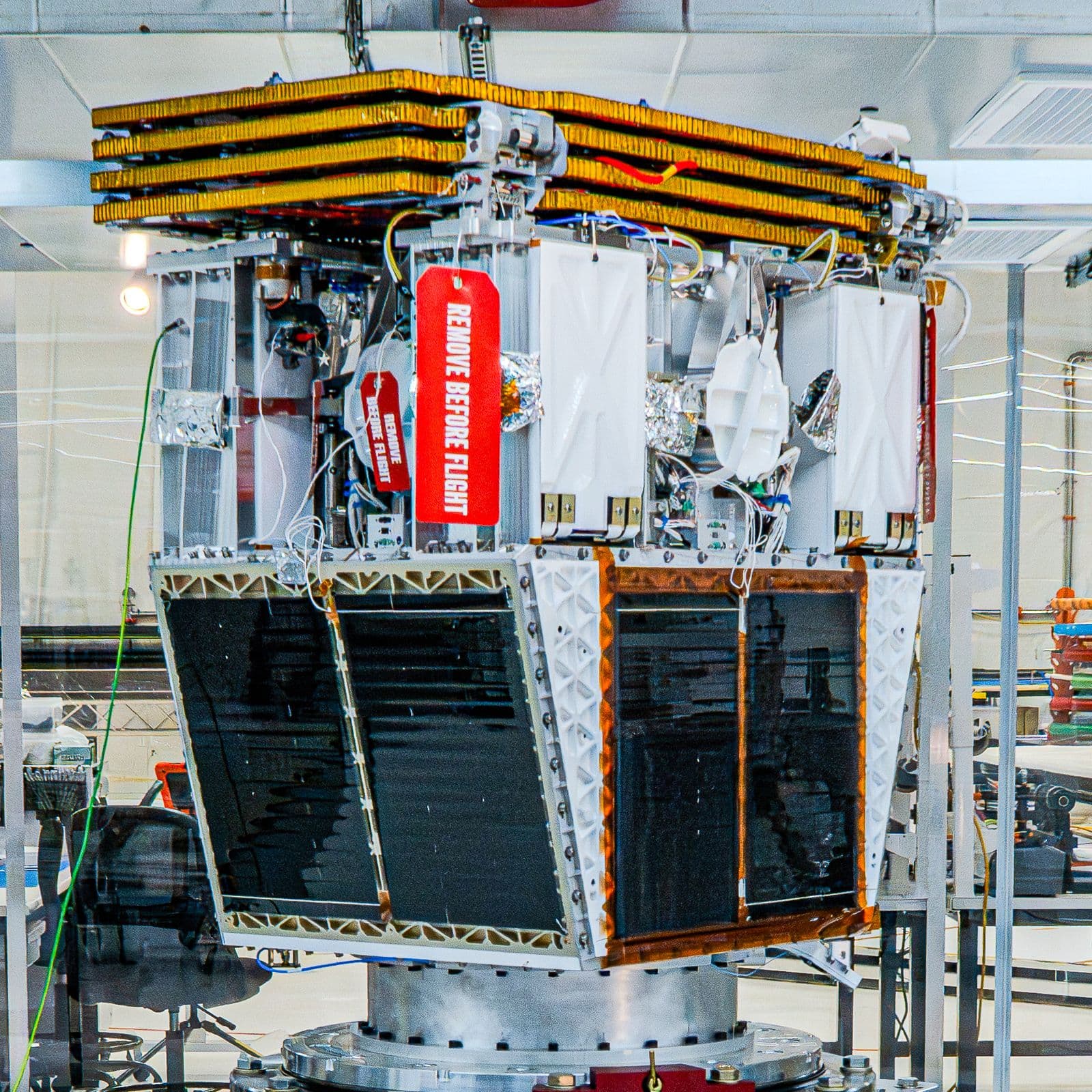
The first demonstration satellite: a 142 kg spacecraft carrying an aluminized thin-film reflector roughly 18 meters on a side, folded into a container about the size of a microwave oven and deployed on orbit at 600 to 650 km. It is designed to steer a reflected beam onto a spot several kilometers wide for up to five minutes per pass, within about two hours of local sunset. Reflect's homepage still describes 2026 lighting as 0.1 lux (full-moon comparable); a peer-reviewed August 2026 paper calculates about 1.05 lux for an 18-meter prototype.

Latest update Sep 16, 2026

Earendil-1

01

Current status

FCC license granted July 9, 2026; launch on a SpaceX rideshare still expected later in 2026, but as of September 16, 2026 Reflect has not named the mission or a date, and the license remains under a pending Application for Review

02

Specifications3

Spacecraft mass
142 kg
Reflector
18 m x 18 m thin film
Orbit
88 degree

(+/- 2 degree) near-polar inclination; deploys to a 510 km (+/- 20 km) insertion orbit then raises to a 625 km (+/- 25 km) operational orbit

03

Upcoming milestones2

Announced next steps from Reflect Orbital that mention Earendil-1.

  1. Late 2026

    Launch Earendil-1, the first orbital mirror

    The FCC granted the license on July 9, 2026 and Reflect expects to fly Earendil-1 on a SpaceX rideshare later in the year; as of September 16, 2026 no launch date has been set, the satellite has not flown, and the August 6 Application for Review is still pending with no Commission timeline. Watch for the launch manifest assignment, then for the two hardest events in sequence: deployment of the 18-meter membrane and the first steered reflection onto a ground target. Everything downstream, including the 2027 tranche and any energy business, depends on this vehicle working.

  2. Jan 5, 2027

    Post the Earendil-1 surety bond

  1. Environmental groups petition FCC to reverse Reflect Orbital OK

    DarkSky International, Environment America, the American Bird Conservancy and Public Employees for Environmental Responsibility filed a petition on August 6 asking the FCC to reverse its approval of Reflect Orbital's Earendil-1 demonstration satellite, which would carry a 59-foot-wide mirror to reflect sunlight onto specific spots on Earth during darkness. The groups argue the FCC limited its review to radiofrequency spectrum and ignored potential harm to nocturnal wildlife, astronomy and eye safety, and warned the single approved test mission could pave the way for a much larger constellation.

    NBC News DarkSky International

  2. FCC clears Reflect Orbital's first orbital mirror satellite

    The FCC granted Reflect Orbital a license on July 9 to build and operate Earendil-1, a 142 kg demonstration satellite carrying an 18-meter-square thin-film reflector designed to beam sunlight to chosen spots on the ground after dark. The license followed a docket that drew roughly 1,900 mostly critical comments, with the FCC saying optical-astronomy concerns fell outside its regulatory authority while noting Reflect's commitments to coordinate with NASA and the NSF; the company is targeting a launch on a SpaceX rideshare later in 2026.

    SpaceNews Space.com

05

More from Reflect Orbital1

06

More in Orbital Economy