QuantumScape

Osprey

In Development

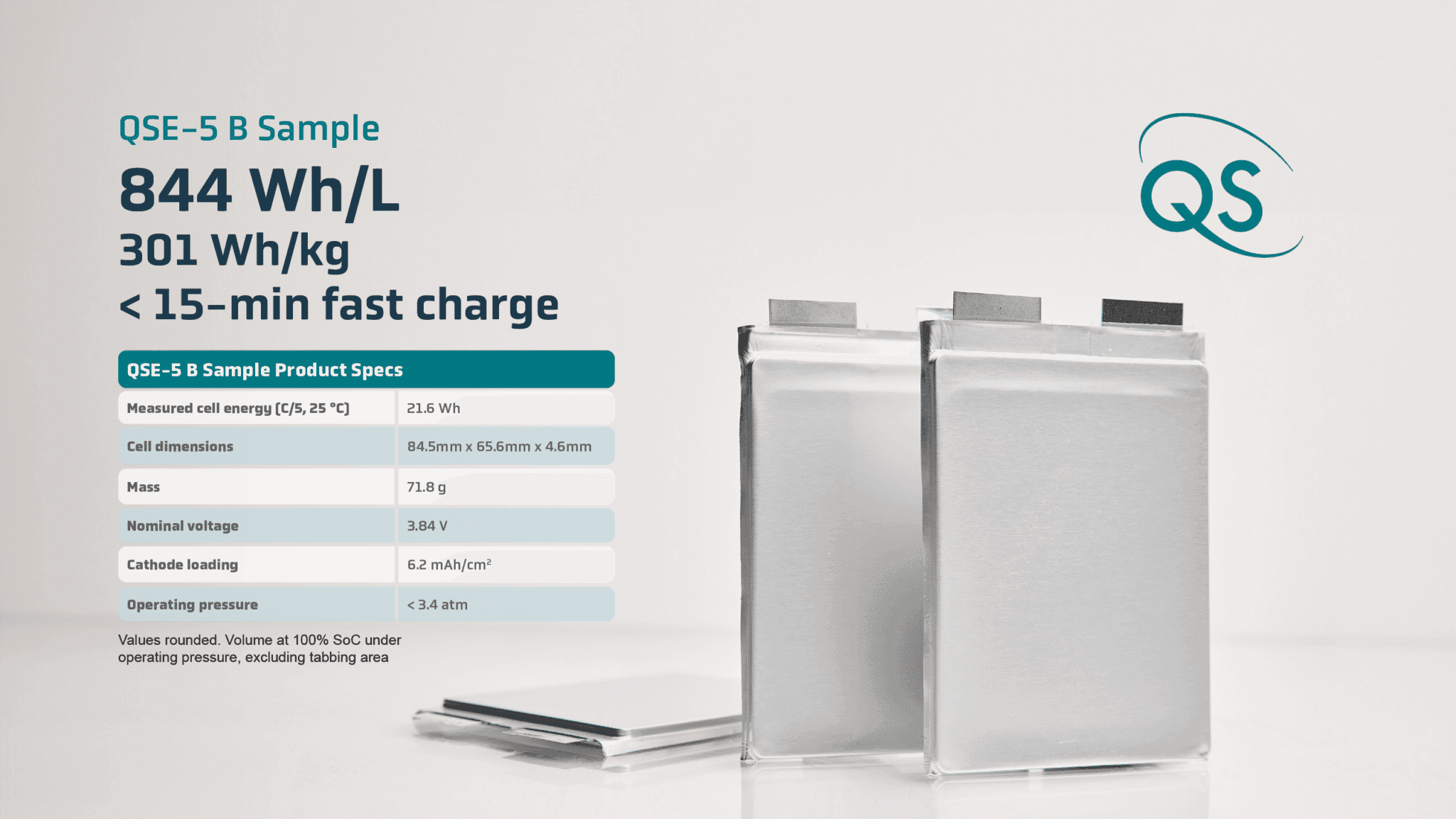
Osprey is QuantumScape's open all-solid-state platform, announced November 11, 2026. It pairs the company's ceramic separator and anode-free lithium-metal design with a solid sulfide cathode. Customers can use a QuantumScape sulfide cathode or bring their own. The company says QSE cells, by contrast, use a liquid catholyte. In early tests the company reports 1,000 cycles to about 80 percent capacity retention at 1C/1C, full depth of discharge, more than 5 mAh/cm2, room temperature, and 1 atmosphere, in a 2-layer unit cell. The release says cells charged from 10 percent to 80 percent in five minutes and operated below -20 C. Electrek, reading the charts, says the cycle test was at 30 C and 5.5 mAh/cm2, the five-minute charge was at 80 C, and the cold result was a smaller single-layer cell. Projected large-format energy density is up to about 1,100 Wh/L. The whitepaper says the process is laboratory scale. No automaker is named.

Latest update Nov 13, 2026

01

Current status

Announced Nov. 11, 2026. Early company tests are laboratory 2-layer cells, not a production cell and not a vehicle test. The release states five-minute charging and does not state the test temperature. Electrek reads that chart as 80 C.

  1. QuantumScape introduces the Osprey all-solid-state platform

    QuantumScape said on November 11, 2026 that it introduced Osprey, an open all-solid-state platform that pairs its ceramic separator and anode-free lithium-metal design with a solid sulfide cathode. The company said early cells, tested at 1C/1C, room temperature, more than 5 mAh/cm2 and full depth of discharge, reached 1,000 cycles to about 80 percent capacity retention at one atmosphere, charged from 10 percent to 80 percent in five minutes, and operated below -20 C. Those figures are QuantumScape's own early tests, not an independent certification. The company said QSE-platform cells are shipping to customers now, that it is already working with automotive partners on Osprey, and that it projects large-format cells could reach about 1,100 Wh/L.

    www.globenewswire.com www.quantumscape.com

03

More from QuantumScape2

04

More in Batteries & Energy Storage