
Stark Defence
Uwe Horstmann
Data verified as of Sep 18, 2026
Summary
Stark Defence (legal name SKD SE) is a Berlin strike-drone company founded in 2024 by a group that included Quantum Systems founder Florian Seibel, CEO Uwe Horstmann and CTO Johannes Schaback, to build the one-way effectors that some of Quantum's early investors would not fund. Its flagship is Virtus, an electric VTOL loitering munition with more than 130 km of range, up to about 75-90 minutes of endurance, a German warhead and a claimed 10-minute field setup, flown through Minerva, Stark's human-in-the-loop C2 software. The company says it went from founding to frontline deployment in 13 months and that Virtus is in operational use in Ukraine. On 26 February 2026 it signed a Bundeswehr framework to deliver several thousand Virtus systems within two years after qualification, its share of a roughly €540 million medium-range loitering-munition package split with Helsing, after a public row over Peter Thiel's Founders Fund stake that the defence ministry said it had cleared. A €500 million Series C closed 23 June 2026, co-led by Sequoia Capital and Founders Fund with the NATO Innovation Fund among the backers; Bloomberg put the valuation at €3.2 billion, while company-side figures cited around €3.5 billion. Cumulative capital is about €640-660 million. The product line now also includes Gambit, a man-portable quadcopter munition whose TDW warhead passed a live effectiveness demo on 26 August 2026; Cascade, a tube-launched effector unveiled with a UK launcher partner on 8 June 2026; Vanta unmanned surface vessels; and, as of 4 September 2026, in-house electronic warfare via the Raydiant RF acquisition. Operations span Germany, Ukraine, the UK, Greece and Sweden, with 18,500 square metres of production floor. October 2025 Financial Times reporting that four Virtus rounds missed in British and German trials remains the main public blemish on a two-year climb from startup to Bundeswehr supplier.
Main Products
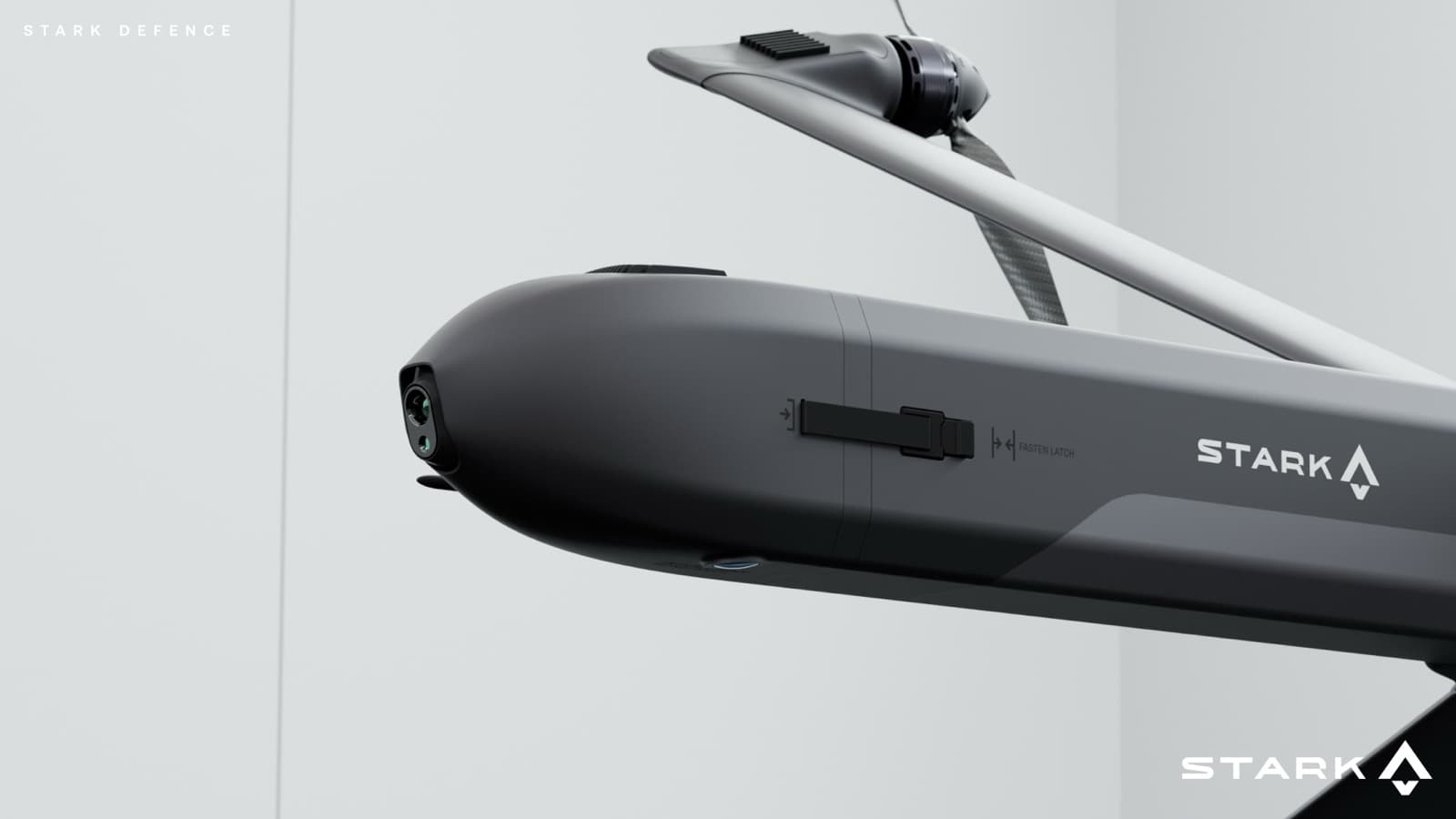
Flagship software-defined eVTOL loitering munition (OWE-V). Launches from unprepared ground in under 10 minutes with no catapult or tube, cruises above 120 km/h, dives at 250 km/h, and carries a modular German warhead of up to 5 kg claimed to penetrate 800 mm of high-hardness armour. GNSS-denied navigation mixes visual odometry with satellite-imagery localisation. Recoverable for training.
Company says it is operational in Ukraine. Bundeswehr framework signed 26 February 2026 for several thousand systems within two years after qualification, deliveries from 2026. Product-page specs list 130 km+ range and 75 minutes flight time; the Bundeswehr announcement cited up to 90 minutes.
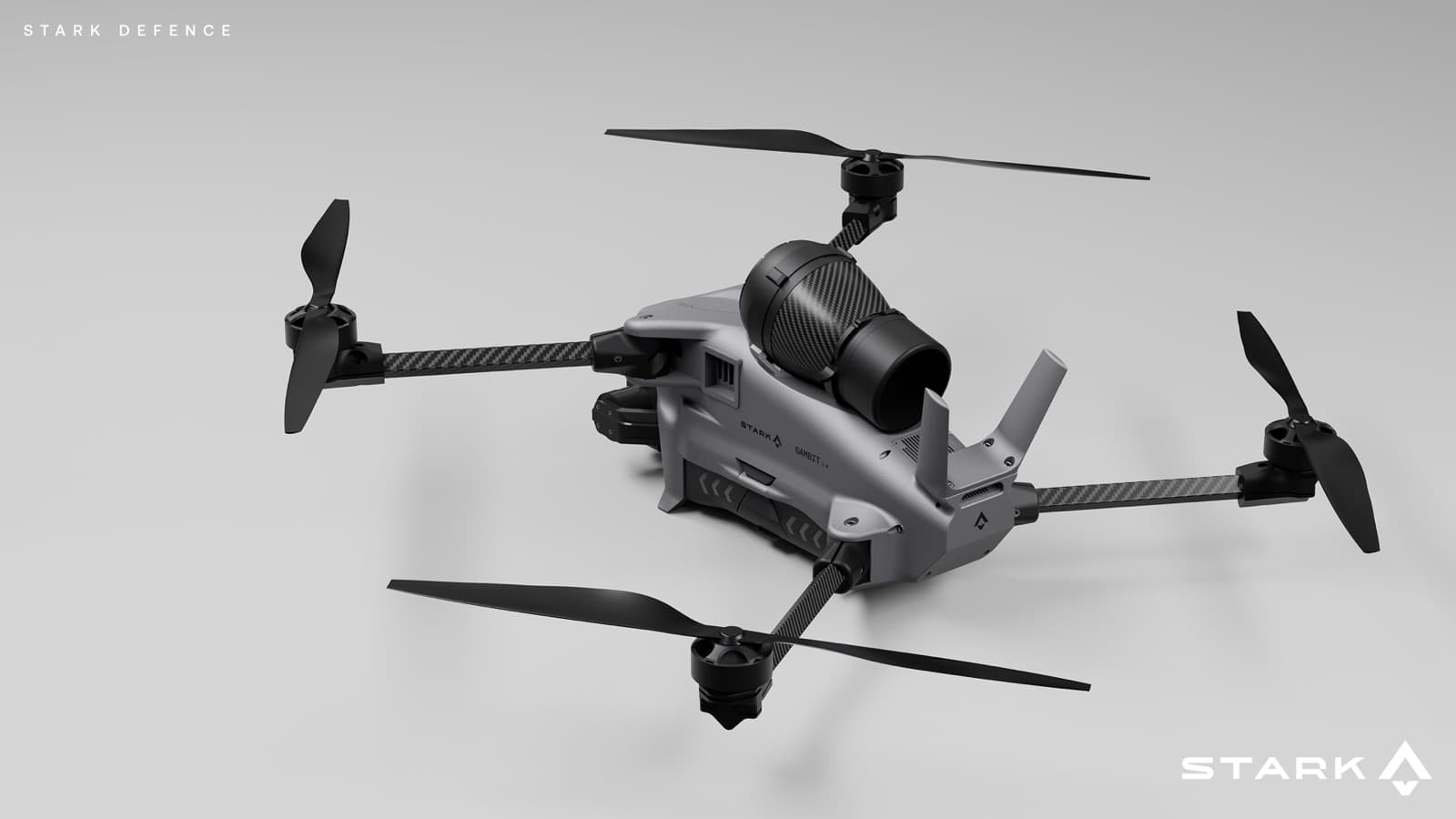
Foldable man-portable eVTOL quadcopter for short-range ISR or strike. Strike variant: under 25 km, under 25 minutes, under 2 kg warhead, 6 kg MTOW. ISR variant: under 40 km, more than 50 minutes, 4-4.5 kg MTOW. Optional fibre-optic guidance for contested EM environments. Recoverable if the mission is aborted.
Unveiled 8 June 2026. TDW warhead, fuze and safety-and-arming unit passed a live effectiveness demonstration against lightly armoured targets on 26 August 2026. No production contract disclosed.
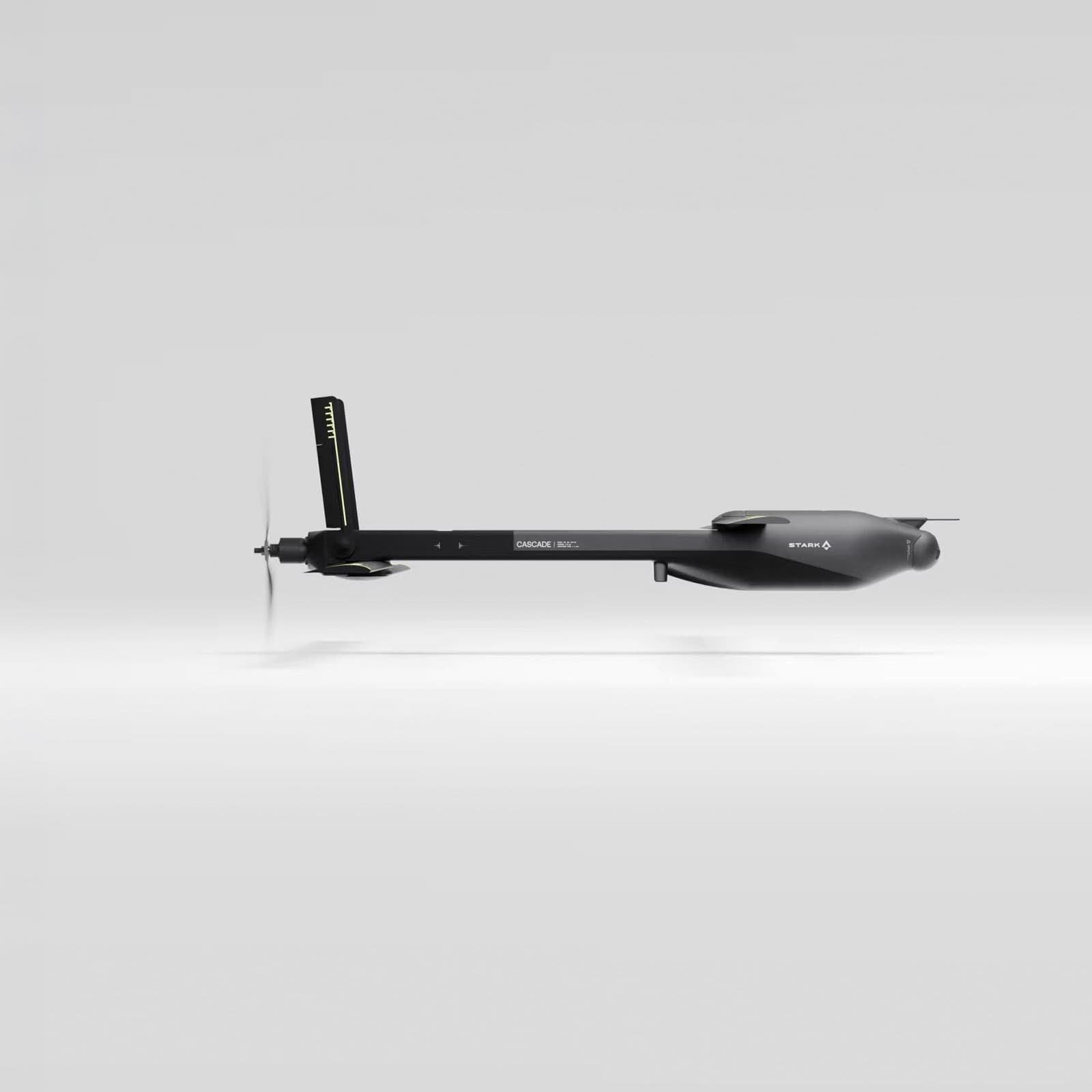
Tube- or canister-launched one-way effector for simultaneous multi-round launch from vehicles, vessels or ground tubes. Folding wings, modular warhead up to 4.5 kg, GNSS-free terminal guidance, under 20 kg for launcher plus effector so more than ten fit on one vehicle. Range 40, 60 or 100 km depending on battery.
Unveiled 8 June 2026 with a UK launcher partner. On 18 September 2026 North Defence said it would integrate Cascade across manned light vehicles and UGVs. No production-contract value disclosed.
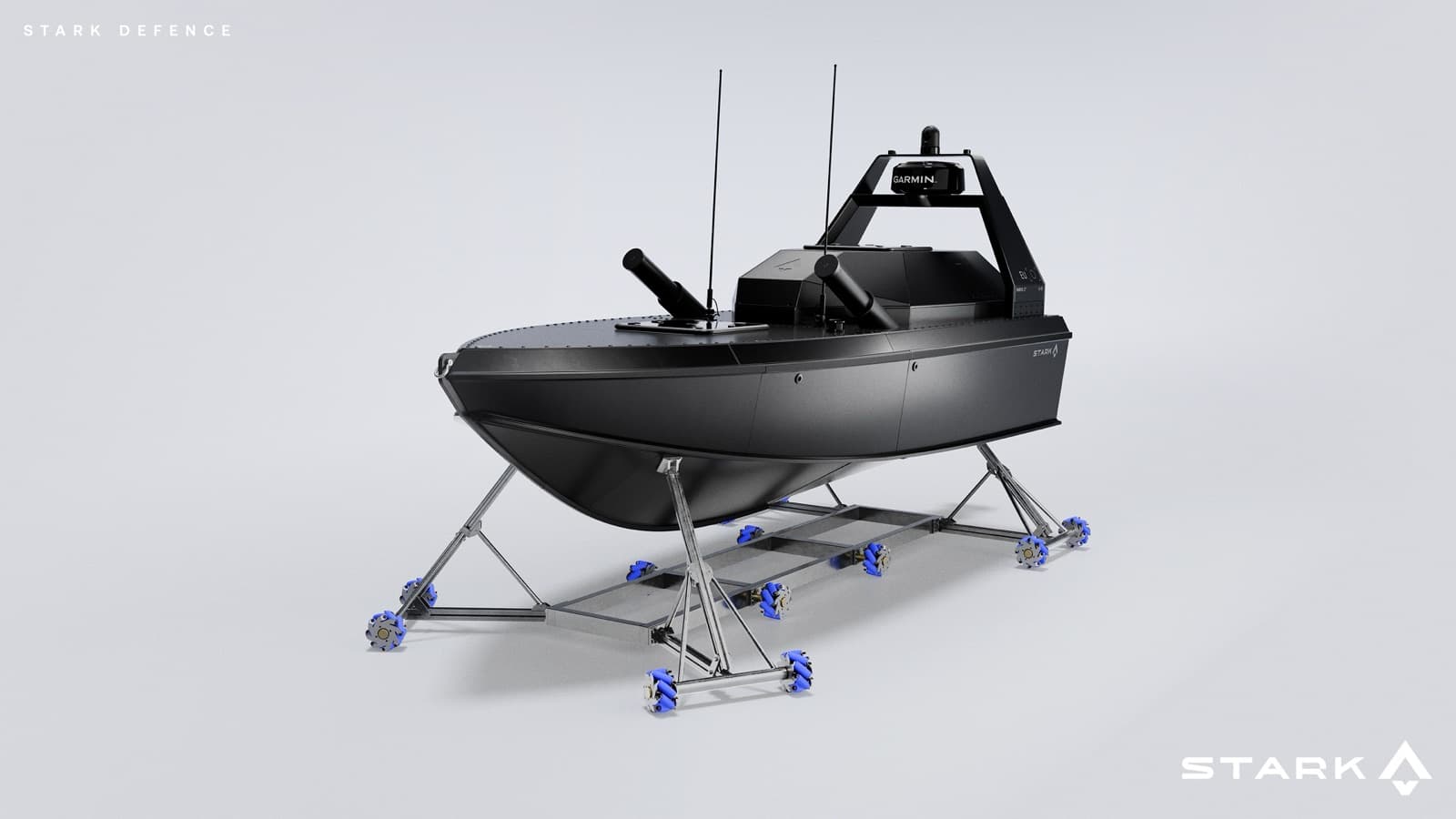
Family of unmanned surface vessels for hybrid naval operations, with multi-sensor (visual, IR, radar) detection, Minerva C2 integration, and a modular payload bay. Specs on the product page: up to 910 nautical miles, 45-plus knots, 2,100 kg displacement, up to 500 kg payload, 6 m length, sea state 4 operate / 6 survive.
On the product list as Vanta-4 and Vanta-6 in secondary reporting. No named navy production contract disclosed as of September 2026.
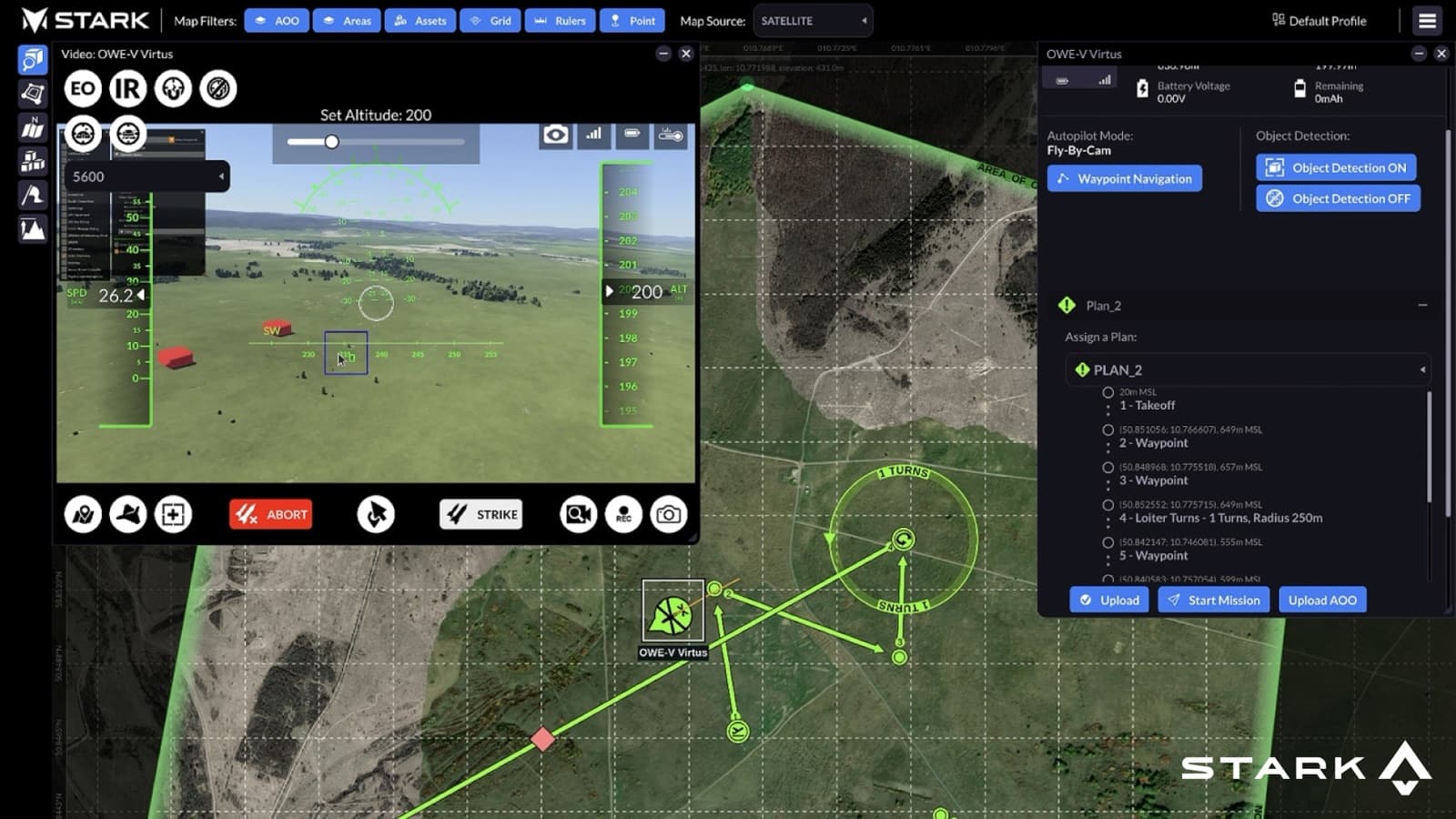
Sovereign, MOSA-based command-and-control software for unmanned weapons across land, air and sea. Automated target prioritisation and effector selection, swarm mission planning from operator intent, and a human-in-the-loop architecture that keeps the engagement decision with the operator. Designed as middleware into existing battle-management systems, with logs built for weapons-system certification.
Flown with Virtus in Bundeswehr recce-strike swarm trials in April 2026, including a live pairing with Quantum Systems Vector. Raydiant RF EW picture is being folded in after the September 2026 acquisition.
What's Next
Qualify Virtus and start Bundeswehr deliveries
The 26 February 2026 framework says deliveries begin in 2026 and that several thousand systems follow within two years after successful qualification, first for Brigade 45 in Lithuania. Qualification status and a first accepted delivery are the gates between a signed framework and a real German programme of record. As of 18 September 2026 Stark has not posted a first-delivery date.
Scale manufacturing toward the stated thousands-per-month rate
More than 80% of the €500 million Series C is earmarked for manufacturing and R&D, with a stated aim of thousands of unmanned systems a month across 18,500 m² in five countries. That is an order of magnitude above anything Stark has publicly delivered. Watch factory output, Ukrainian local production, and whether Swindon and the German plants actually hit a disclosed rate.
Turn Gambit into a production munition after the TDW warhead demo
The 26 August 2026 live effectiveness test cleared the German warhead path for the man-portable quadcopter. Watch for a first named customer, a fibre-optic variant in contested EW, and whether Gambit becomes the Bundeswehr 'everyman's weapon' some German coverage has sketched.
Field Cascade from vehicles via the North Defence integration
The 18 September 2026 North Defence partnership is the first named vehicle integration for the tube-launched effector. A working fit on a manned light vehicle or UGV, and any follow-on UK or allied order, would show Cascade is more than a show stand.
Integrate Raydiant RF electronic warfare onto the fleet
The 4 September 2026 acquisition is supposed to take R-Zero from a single payload to a broader EW line and to feed spectrum data into Minerva. Watch for a named EW product beyond R-Zero and a fielded directional-link kit on Virtus or Gambit.
Operations & Revenue
Virtus is under a Bundeswehr framework with deliveries slated to start in 2026 once qualification closes, and the company says the type is already operational in Ukraine. Gambit has a demonstrated TDW warhead but is not yet a named production programme. Cascade is being integrated onto North Defence vehicles. Manufacturing and R&D now sit in five countries (Germany, Ukraine, UK, Greece, Sweden) on 18,500 m² of floor, with more than 80% of the June 2026 Series C earmarked for factories and R&D toward a stated target of thousands of systems a month. That rate is a company ambition, not a demonstrated delivery print. A possible merger with Quantum Systems has been floated by Quantum's co-CEO and denied by a Stark spokesperson.
Revenue Streams
The core product: eVTOL one-way effectors sold first to Ukraine and, from 2026, to the Bundeswehr under a several-thousand-unit framework aimed at Brigade 45 in Lithuania. Training reuse via VTOL recovery is part of the German pitch.
Shorter-range effectors (Gambit, Cascade)
Man-portable quadcopter and tube-launched munitions unveiled June 2026. Gambit's TDW warhead passed a live demo in August 2026; Cascade is being integrated on North Defence vehicles. No production-contract values disclosed.
Key Metrics
- Employees
- About 400 (German Wikipedia, 2026); third-party tracker aVenture listed 450 around the June 2026 Series C
- Est. Annual Revenue
- Not disclosed. The February 2026 Bundeswehr Virtus framework (several thousand systems, first tranche of a roughly €540 million two-vendor package with Helsing) is the largest publicly described commercial commitment. No audited revenue, backlog or 2026 delivery count has been published. Treat any third-party dollar revenue scrapes as unverified.
- Valuation
- €3.2B per Bloomberg on the 23 June 2026 Series C; company-side figures cited around €3.5B. No later round as of 18 September 2026.
- Total raised
- About €640M (Bloomberg: €140M prior plus €500M Series C); some reports put the cumulative figure above €660M
- Bundeswehr Virtus award
- Framework for several thousand systems within two years after qualification, deliveries from 2026; Stark's share of a ~€540M first-tranche package with Helsing. Some secondary reports have cited ~€269M as Stark's slice of that package.
Timeline
On 25 February 2026 the Bundestag budget committee approves a medium-range loitering-munition buy from Stark and Helsing, reported at about €540 million for the first tranche inside a larger capped framework. Stark signs the Virtus framework the next day: deliveries to start in 2026, several thousand systems within two years after successful qualification, aimed first at Brigade 45 in Lithuania. A prior public dispute over Peter Thiel's influence is closed after Stark and the ministry say he holds a single-digit minority with no control rights or board seat.
At the end of April 2026 Stark says Virtus and Minerva were integrated with Quantum Systems' Vector ISR drone in Bundeswehr trials of AI-supported recce-strike swarms, a live sensor-to-shooter pairing of the two Seibel-founded companies.
On 23 June 2026 Stark raises €500 million co-led by Sequoia Capital and Founders Fund, with the NATO Innovation Fund, Döpfner Capital, Air Street Capital, 201 Ventures, Project A and Advent participating. Bloomberg reports a €3.2 billion valuation; company-side figures cited to Tectonic and others put the mark around €3.5 billion. Bloomberg said the company had previously raised €140 million, implying roughly €640 million cumulative.
On 26 August 2026 Stark and MBDA subsidiary TDW say a live test in Germany confirmed Gambit's TDW multi-effect warhead, fuze and safety-and-arming system can destroy lightly armoured targets. The warhead is already qualified and in NATO service. The companies had previously conducted Germany's first live loitering-munition firing with Virtus in December 2025.
On 4 September 2026 Stark buys Berlin startup Raydiant RF (directional antennas, analog electronics, software-defined radios) and folds founder Luca Steinweg in as head of communications/EW. Stark had already built R-Zero, an EW payload for locating hostile transmitters; Raydiant's compact directional antenna is meant to cut the electromagnetic signature of unmanned links.
On 18 September 2026 UK vehicle maker North Defence says it will integrate Stark's Cascade tube-launched loitering munition across its manned light mobility vehicles and next-generation unmanned ground vehicles, giving Cascade a vehicle-mounted launch path in the UK and Luxembourg.
On 31 October 2025 the Financial Times reports that in trials with British and German forces, four Virtus attack drones failed to hit their targets, including one that crashed in a German forest and a battery fire after impact in Kenya. Stark says crashes are part of development and that prototypes had already crashed 'a hundred times.'
SKD SE is incorporated in Berlin by a group of German technology operators including Florian Seibel (also co-founder of Quantum Systems), Uwe Horstmann and Johannes Schaback. The company is created specifically to field one-way effectors after some Quantum investors declined to fund lethal systems.