
Cerebras Systems
Andrew Feldman
Data verified as of Sep 23, 2026
Summary
Cerebras Systems, founded in Sunnyvale in 2015 by Andrew Feldman, Gary Lauterbach, Michael James, Sean Lie, and Jean-Philippe Fricker, is the only company to commercialize a wafer-scale AI processor. Its Wafer-Scale Engine uses an entire TSMC silicon wafer as one chip, packing 4 trillion transistors and 900,000 cores with 44 GB of on-chip SRAM so model weights stay on die instead of shuttling across scarce HBM. That architecture now sits under a public company: Class A shares began trading on Nasdaq as CBRS on May 14, 2026, and the IPO closed the next day at $185 a share, raising $6.38 billion gross ($6.2 billion net) in what the company called the largest semiconductor IPO on record. The commercial center of gravity is a December 2025 OpenAI master relationship agreement to supply 750 MW of inference capacity through 2028, valued at more than $20 billion, with an option for another 1.25 GW by 2030, plus a $1 billion OpenAI working-capital loan and warrants. Q2 2026 core revenue hit a record $209.9 million (+103% YoY) as core cloud and other services nearly quadrupled to $127.7 million, remaining performance obligations stood at $25.4 billion, and management raised 2026 core-revenue guidance to $880-890 million while planning to more than triple revenue in 2027. On August 18, 2026 it unveiled CS-4, a three-wafer Nexus rack claiming up to 30x faster inference than GPU systems, with first shipments due in Q3 2026. Cerebras is also pairing decode-optimized wafers with AWS Trainium (Amazon Bedrock targeted for Q1 2027) and AMD Helios (production in Q4 2026) for disaggregated inference, and has more than 600 MW of data-center capacity live or under contract for delivery by the end of 2027. The overhang is concentration and losses: OpenAI already accounted for $56.8 million of Q2 GAAP revenue, G42 and MBZUAI were 86% of 2025 sales, GAAP operating margin was -265% in Q2 on IPO-related stock-based compensation, and converting the backlog depends on standing up that contracted capacity on time.
Main Products
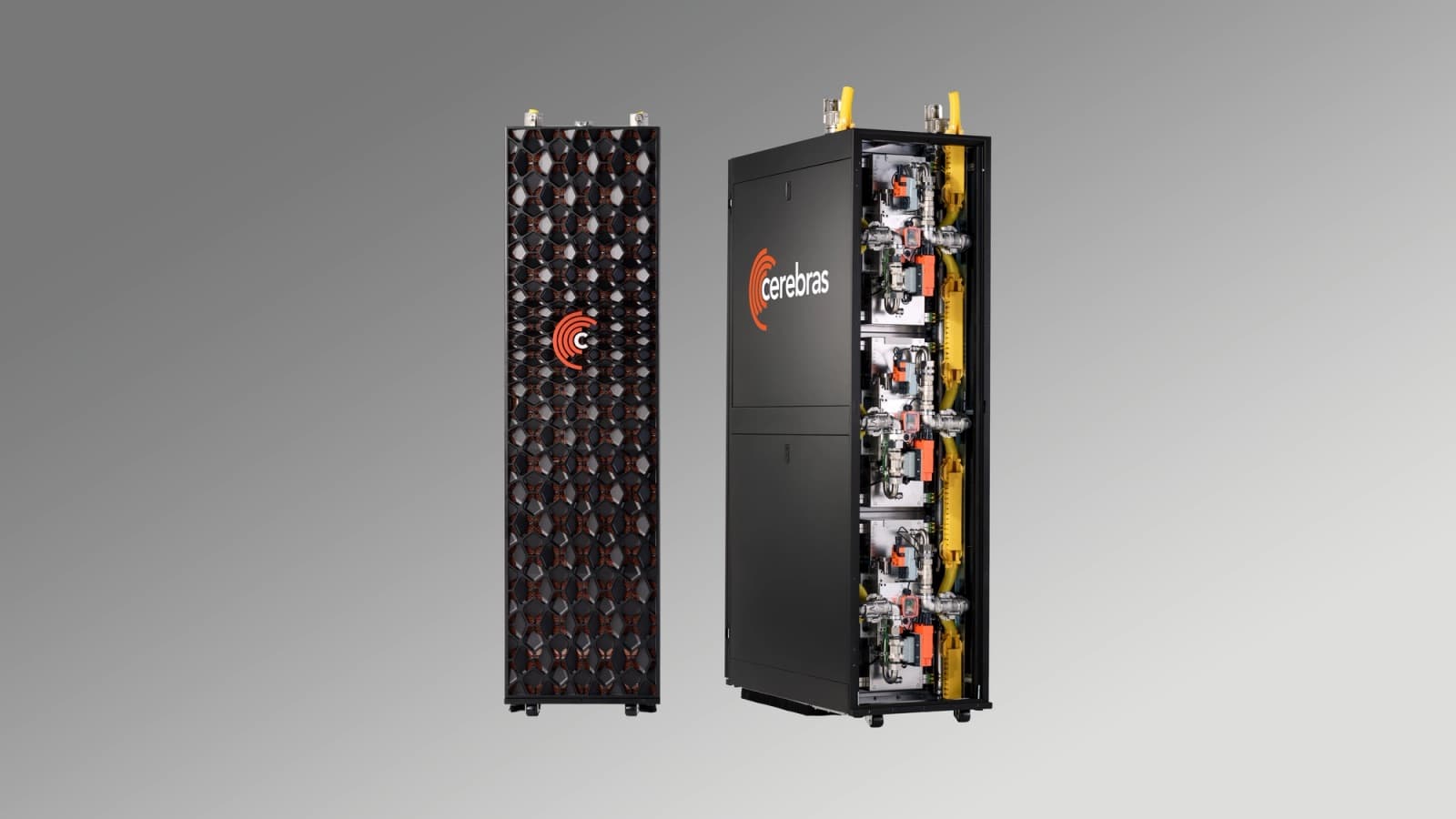
Rack-scale AI system on the new Cerebras Nexus platform, built from three WSE-3 Turbo processors in modular liquid-cooled compute backpacks. Cerebras says CS-4 delivers up to 30x faster inference than GPU systems, up to 10x more throughput per watt than CS-3, 750 PFLOPs of AI compute, 7.2 Tbps of I/O, 129.6 PB/s of memory bandwidth, and wafer-to-wafer latency as low as 2 microseconds for models above 50 trillion parameters.
Unveiled August 18, 2026. First customer shipments targeted for Q3 2026. Nexus is also the rack for CS-5, aimed at 2027.
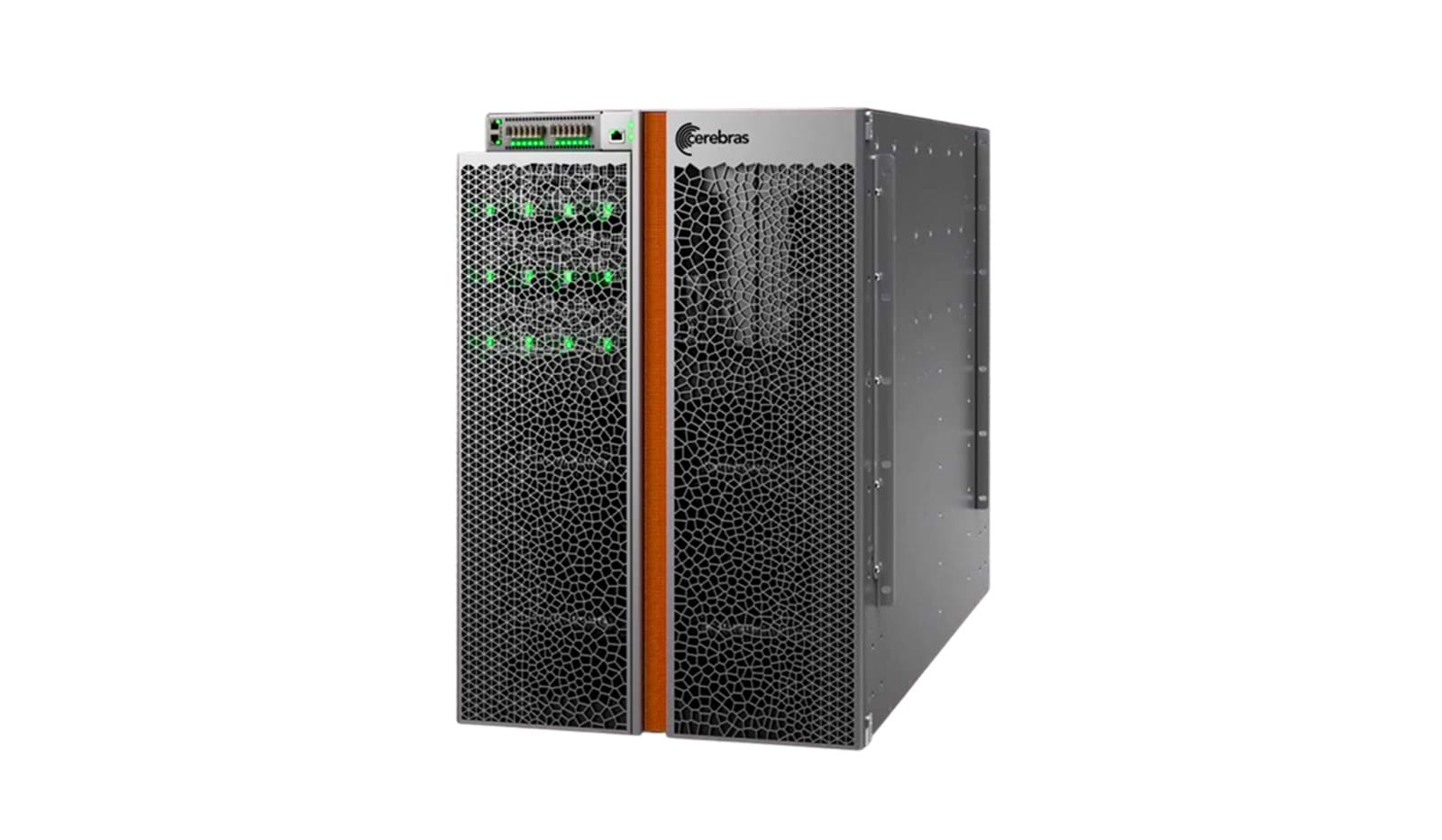
Current production wafer-scale system, one WSE-3 per chassis, used for Cerebras Cloud, OpenAI Ultrafast, AWS disaggregated decode, and on-prem clusters. The 5nm WSE-3 is 46,225 mm2 with 4 trillion transistors, 900,000 AI cores, 44 GB of on-chip SRAM, and 21 PB/s of memory bandwidth, about 58 times the area of an Nvidia B200 die and thousands of times its on-chip memory bandwidth.
In volume production. Flex is expanding Milpitas lines for an expected ~7x CS-3 output increase through 2026; Sanmina and Rocket EMS are also adding lines. Still the workhorse for OpenAI, AWS, and the inference cloud while CS-4 ramps.
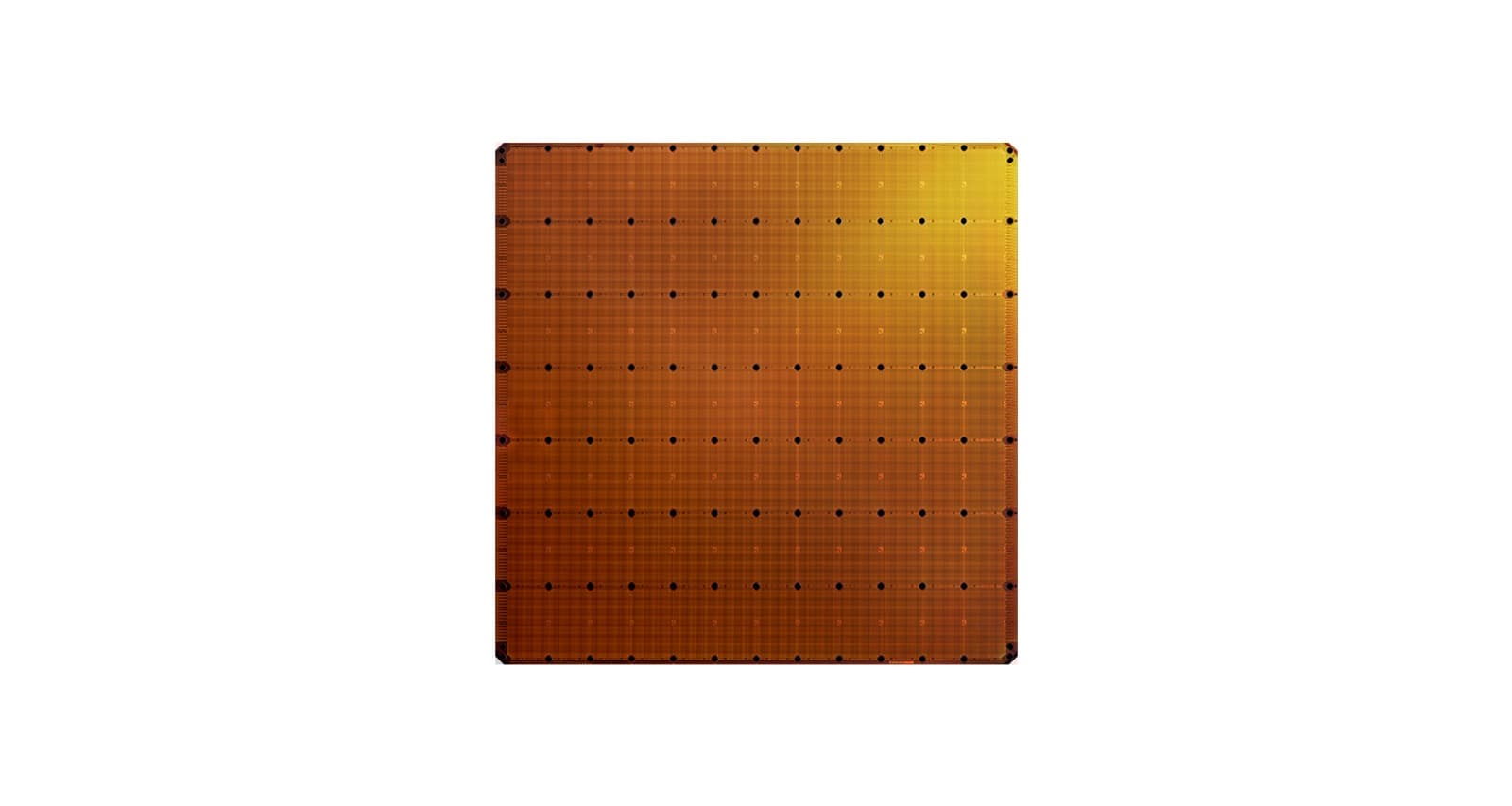
Current flagship wafer-scale processor inside CS-4. Same 4 trillion transistors, 900,000 cores, 46,225 mm2, and 44 GB of SRAM as WSE-3, clocked and packaged for roughly 2x the speed of the prior wafer, 250 PFLOPs of AI compute, and 43.2 PB/s of memory bandwidth per wafer. Redundant cores and fail-in-place routing are how Cerebras yields a dinner-plate-sized die.
Announced with CS-4 on August 18, 2026. Ships as the compute element of CS-4; WSE-3 (non-Turbo) remains in CS-3 production. Fabbed at TSMC without HBM, CoWoS, or 3nm.
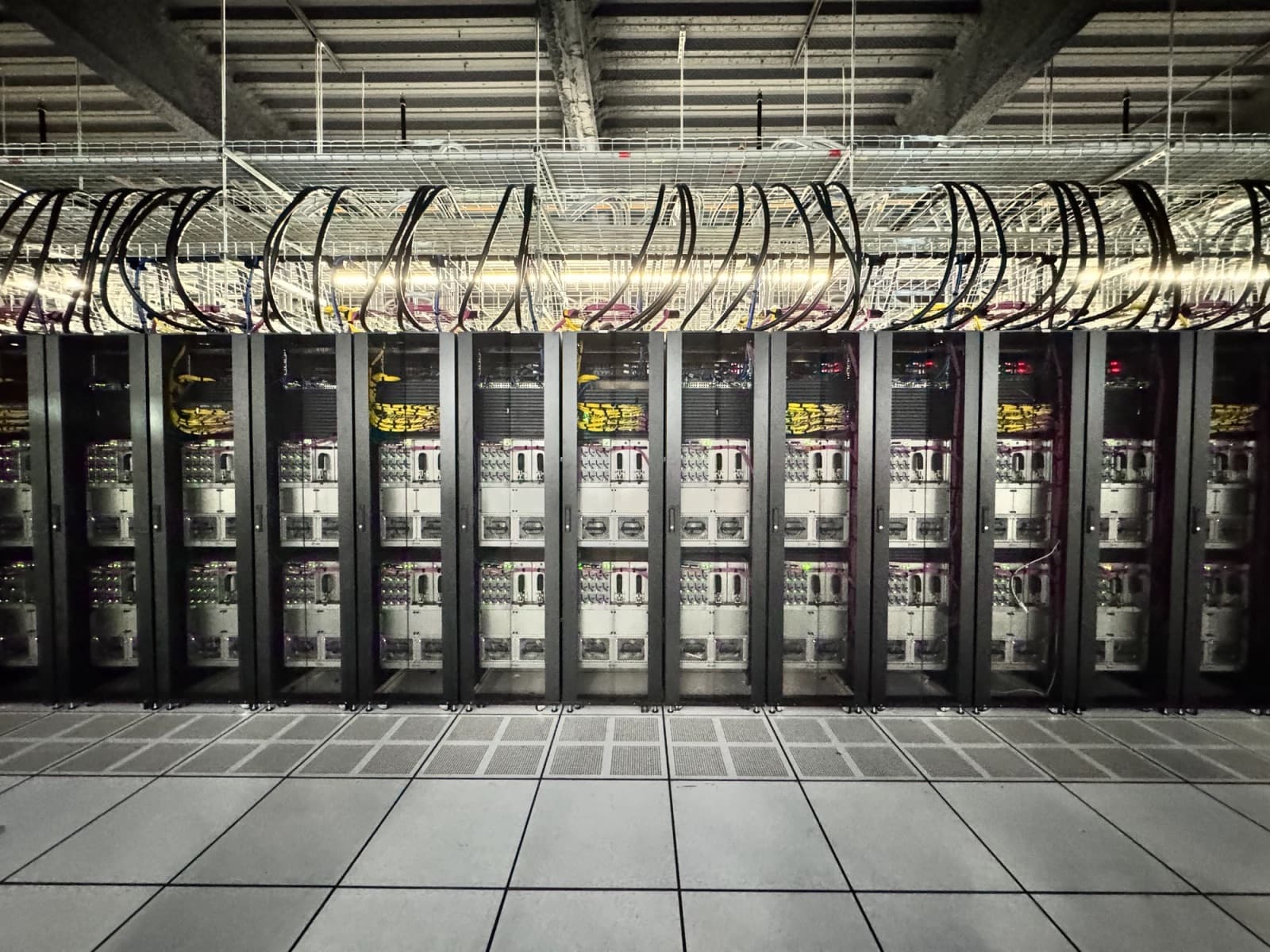
Cerebras-operated cloud that serves open and dedicated models through an OpenAI-compatible API, plus a training cloud for fine-tunes and from-scratch runs. Production customers include OpenAI (GPT-5.6 Sol Ultrafast), Meta's Llama API, Mistral, Perplexity, Cognition, Lovable, CrowdStrike, AlphaSense, GSK, Block, and Figma. Partner distribution includes AWS Marketplace, OpenRouter, Hugging Face, Vercel, and IBM watsonx.
Core cloud revenue $127.7M in Q2 2026 (+287% YoY). AMD Helios disaggregated inference is due in production on the cloud in Q4 2026; AWS Bedrock is targeted for Q1 2027. New 165 MW Mikkeli capacity is under construction.
What's Next
Report Q3 2026 results and clear the remaining IPO lock-up
The remaining IPO lock-up lasts until the earlier of the Q3 2026 earnings report or the 180-day outside date. That print is the first look at whether CS-4 shipments, OpenAI Ultrafast, and cloud mix are tracking the $880-890 million full-year core-revenue guide.
Put the AMD Helios disaggregated stack into production
The July 23, 2026 AMD partnership puts Helios on prefill and Cerebras wafers on decode, targeting up to 5x tokens per second per watt. The Q2 call moved the production date to Q4 2026 on Cerebras Cloud. Watch a public availability date, a named model, and whether Helios racks actually land in Cerebras datacenters.
Launch Cerebras on Amazon Bedrock
AWS is deploying CS-3 for decode next to Trainium prefill, connected by EFA. Management is guiding general availability on Bedrock to Q1 2027, with first hyperscale revenue later in 2027. That AWS volume is not in the $25.4 billion RPO figure, so a signed, revenue-bearing Bedrock launch would be incremental.
At Hot Chips 2026 Cerebras said CS-5, due in 2027, pairs Nexus with the next WSE and targets up to 10,000 output tokens per second per user on open models such as Gemma 4 31B and gpt-oss-120b, and up to 5,000 tok/s on multi-trillion-parameter models. The Q2 call put CS-5 in the second half of 2027.
Stand up 600 MW of contracted capacity, including Mikkeli 165 MW
Q2 disclosed more than 600 MW live or under contract for delivery by the end of 2027, plus a July plan for 200 MW in Europe and a September 1 Mikkeli campus that scales 50 MW to 80 MW to 165 MW. Converting the OpenAI 750 MW commitment into recognized revenue depends on this build. Watch 50 MW Mikkeli energization and year-end 2026 first European MW.
More than triple revenue in 2027
CFO Bob Komin said on the August 12, 2026 Q2 call that Cerebras plans to more than triple revenue in 2027 off the $880-890 million 2026 core guide, which would imply well above $2.5 billion. Only about 22% of the $25.4 billion RPO is expected in the 24 months through June 2028, so the 2027 print is the first real test of backlog conversion.
Deliver the OpenAI 750 MW through 2028
The December 2025 MRA commits OpenAI to 750 MW of inference capacity in tranches during 2026-2028, with a 1.25 GW option through 2030. Q2 recognized $56.8 million under the deal. Watch tranche deliveries, whether OpenAI exercises the option, and whether the $1 billion working-capital loan keeps being repaid in service credits rather than cash.
Track Record
5 of 5 announced dates hit
Target 2026 · Resolved May 14, 2026
Class A shares began trading on Nasdaq on May 14, 2026 under ticker CBRS at a $185 offering price. The deal closed May 15 with the greenshoe exercised, 34.5 million shares, $6.38 billion gross and about $6.2 billion net. The stock opened near $350 and closed the first day at $311.07.
Announce a hyperscaler cloud partnership
Target 2026 · Resolved Mar 13, 2026
AWS and Cerebras announced the Trainium-prefill / CS-3-decode partnership on March 13, 2026. Bedrock general availability is still targeted for Q1 2027, so the product launch remains ahead of the company; the partnership itself is signed.
Sign a multi-year OpenAI inference supply deal
Target 2026 · Resolved Dec 24, 2025
The master relationship agreement was signed December 24, 2025. OpenAI committed to 750 MW through 2028, valued at more than $20 billion, with a 1.25 GW option. Cerebras began recognizing MRA revenue in Q1 2026 and hosted GPT-5.6 Sol Ultrafast at 750 tokens/sec in August 2026. Delivery of the megawatts themselves remains a 2026-2028 next step.
Operations & Revenue
Cerebras is a going-concern public company with $8.6 billion of liquidity after the IPO, a $25.4 billion contracted backlog, and more than 600 MW of data-center capacity live or under contract through 2027. The mix has flipped from hardware toward cloud: Q2 core cloud revenue was $127.7 million versus $82.1 million of core hardware. CS-3 remains the production workhorse (Flex is adding U.S. lines for a ~7x 2026 capacity lift), CS-4 was unveiled August 18 with first shipments due this quarter, and disaggregated stacks with AMD (Q4 2026 production) and AWS Bedrock (Q1 2027) are the path into hyperscale. Execution risk is concentrated: a large share of RPO is the OpenAI 750 MW deal, 2025 revenue was 62% MBZUAI and 24% G42, GAAP Q2 operating margin was -265% on IPO stock-based compensation, and only about 22% of the $25.4 billion backlog is expected to convert in the next 24 months. Shares have roughly halved from the $386.34 first-day high and now trade around $198, a ~$47 billion market cap.
Revenue Streams
Pay-as-you-go inference, dedicated capacity, training cloud, and related services on Cerebras-owned and partner datacenters. Q2 2026 core cloud and other services revenue was $127.7 million (+287% YoY), now the majority of core revenue, including OpenAI Ultrafast, Cognition, Lovable, CrowdStrike, AlphaSense, GSK, Block, and Figma. GAAP cloud includes some pass-through datacenter costs billed to customers.
On-prem CS-3 and upcoming CS-4 wafer-scale racks sold or leased to labs, sovereigns, and hyperscalers, plus wafer-scale clusters such as Condor Galaxy. Q2 2026 core hardware revenue was $82.1 million (+17% YoY). Systems are assembled in the U.S. with Flex, Sanmina, and Rocket EMS; wafers are fabbed at TSMC on 5nm without HBM, CoWoS, or 3nm.
Key Metrics
- Employees
- 708 (as of Dec 31, 2025)
- Est. Annual Revenue
- $510.0M (FY2025, +76% YoY). H1 2026 GAAP revenue $373.5M. FY2026 core (non-GAAP) guidance $880-890M; management plans to more than triple revenue in 2027. FY2025 GAAP net income $237.8M included large one-time fair-value gains; non-GAAP net loss was $75.7M.
- Market cap
- ~$47.1B (Sep 18, 2026, CBRS about $198.06; 237.56M shares across Class A/B/N). First-day close was $311.07; 52-week range $160.81-$386.34.
- Latest quarterly revenue
- GAAP $180.1M (Q2 2026, +74% YoY); core (non-GAAP) $209.9M (+103%). Q3 core guided at $214-216M.
- Cloud mix
- Q2 2026 core cloud and other services $127.7M (+287% YoY) vs core hardware $82.1M (+17%). GAAP cloud $126.0M vs GAAP hardware $54.1M.
- Remaining performance obligations
- $25.4B as of June 30, 2026 (mostly the OpenAI 750 MW MRA). About 22% (~$5.6B) expected in the first 24 months; 43% in months 25-48. AWS is not in the RPO balance.
- FY2026 core revenue guidance
- $880-890M (raised Aug 12, 2026 from $855-865M); core GM 41-43%; core operating margin -19% to -17%. Plan to more than triple revenue in 2027.
- Liquidity
- $8.6B cash, cash equivalents, restricted cash, and short-term investments as of June 30, 2026, plus an $850M revolving credit facility.
- Data-center capacity under contract
- More than 600 MW live or under contract for delivery by end of 2027, with a gigawatt-scale pipeline. Finland Mikkeli adds 165 MW in phases (first 50 MW under construction).
- OpenAI contract
- 750 MW of inference capacity through 2028, valued at more than $20B, plus a 1.25 GW option through 2030. Q2 2026 GAAP revenue from the MRA: $56.8M. ~$1B working-capital loan outstanding in part, repaid in service credits.
Timeline
On March 13, 2026 Cerebras and AWS announce that CS-3 systems will go into AWS data centers, with Trainium handling prefill and Cerebras wafers handling decode over Elastic Fabric Adapter, targeting up to 5x more high-speed token capacity. The companies later guide Amazon Bedrock availability to Q1 2027.
Class A shares begin trading on May 14, 2026 under ticker CBRS and close the first day at $311.07 after pricing at $185. The offering, including the full 4.5 million-share greenshoe, sells 34.5 million shares for about $6.38 billion gross and $6.2 billion net, the largest U.S. semiconductor IPO on the company's telling. Dual-class B shares keep about 99% of voting power with insiders.
On July 9, 2026 Flex and Cerebras say new Milpitas, California lines should lift CS-3 production about 7x through 2026. The same day, Feldman tells the RAISE Summit in Paris that first European capacity will come online by year-end 2026 and that total European capacity is planned at 200 MW by the end of 2027, with sites in France, Norway, and Finland.
On July 22, CrowdStrike says Falcon AIDR will run on Cerebras inference while Cerebras standardizes on Falcon for its own security. On July 23, AMD and Cerebras announce a Helios-plus-WSE disaggregated stack aiming at up to 5x tokens per second per watt, first through Cerebras Cloud in H2 2026 and in production in Q4 2026.
On August 12, 2026 Cerebras reports GAAP revenue of $180.1 million (+74%) and record core revenue of $209.9 million (+103%), with core cloud and other services at $127.7 million (+287%). Remaining performance obligations are $25.4 billion, liquidity is $8.6 billion, more than 600 MW of data-center capacity is under contract for 2027, and full-year 2026 core-revenue guidance is raised to $880-890 million. GAAP operating loss is $477.2 million, largely from IPO-triggered stock-based compensation.
On August 13, 2026 OpenAI and Cerebras preview Ultrafast mode for GPT-5.6 Sol, a limited API tier running on WSE-3 at up to 750 output tokens per second, about 14x standard processing, with the same intelligence as the standard model. Cerebras says Ultrafast finished Humanity's Last Exam's 2,500 questions in 11 hours 11 minutes versus more than three days on a slower frontier stack.
At its SUPERNOVA event on August 18, 2026 Cerebras introduces CS-4, a rack built from three WSE-3 Turbo processors on the new modular Nexus platform. The company claims up to 30x faster inference than GPU systems, up to 10x more throughput per watt than CS-3, 750 PFLOPs of AI compute, 129.6 PB/s of memory bandwidth, and 2-microsecond wafer-to-wafer links, with first shipments in Q3 2026. A week later at Hot Chips it previews CS-5 for 2027 and CS-6 3D-stacked DRAM.
On September 1, 2026 Cerebras and Compute Nordic Finland announce a Mikkeli, Finland AI data center that will scale in phases to 165 MW of contracted IT capacity under seven-year service orders, with construction on the first 50 MW phase already under way. Independent analysis cited in the release puts full-scale regional investment at EUR 1.0-1.7 billion.
In September 2025 Cerebras sells Series G preferred at $36.23 a share, raising $1.1 billion net. The round comes as Meta, Mistral, Perplexity, and Hugging Face start routing high-speed inference over Cerebras, and as the company announces a six-site datacenter expansion.
On December 24, 2025 Cerebras and OpenAI sign a master relationship agreement under which OpenAI will purchase 750 MW of AI inference capacity deployed in tranches through 2028, a deal Cerebras values at more than $20 billion, with an option for 1.25 GW more by 2030. OpenAI also funds a ~$1 billion working-capital loan in January 2026 and receives warrants covering about 33.4 million Class N shares.
Cerebras introduces the 5nm WSE-3 (4 trillion transistors, 900,000 cores, 44 GB SRAM, 21 PB/s memory bandwidth) and the CS-3 system, later named to Time's best inventions of 2024. In August it launches a public AI inference cloud it claims is 10-20x faster than Nvidia H100 GPU systems on open models.
After years of packaging, cooling, and yield work, Cerebras introduces the first-generation Wafer-Scale Engine and the CS-1 rack appliance, with about 400,000 cores, 1.2 trillion transistors, and 18 GB of on-chip memory. Early customers are national labs and life-sciences groups, including Argonne, GSK, and AstraZeneca.
Andrew Feldman, Gary Lauterbach, Michael James, Sean Lie, and Jean-Philippe Fricker found Cerebras in Sunnyvale after working together at SeaMicro (sold to AMD in 2012). The bet is that AI is a communication-bound workload and that the way to cut latency is to keep compute and memory on one wafer-scale chip.
Funding
Cumulative disclosed raise · dated rounds