Isar Aerospace
Daniel Metzler
Data verified as of Sep 23, 2026
Summary
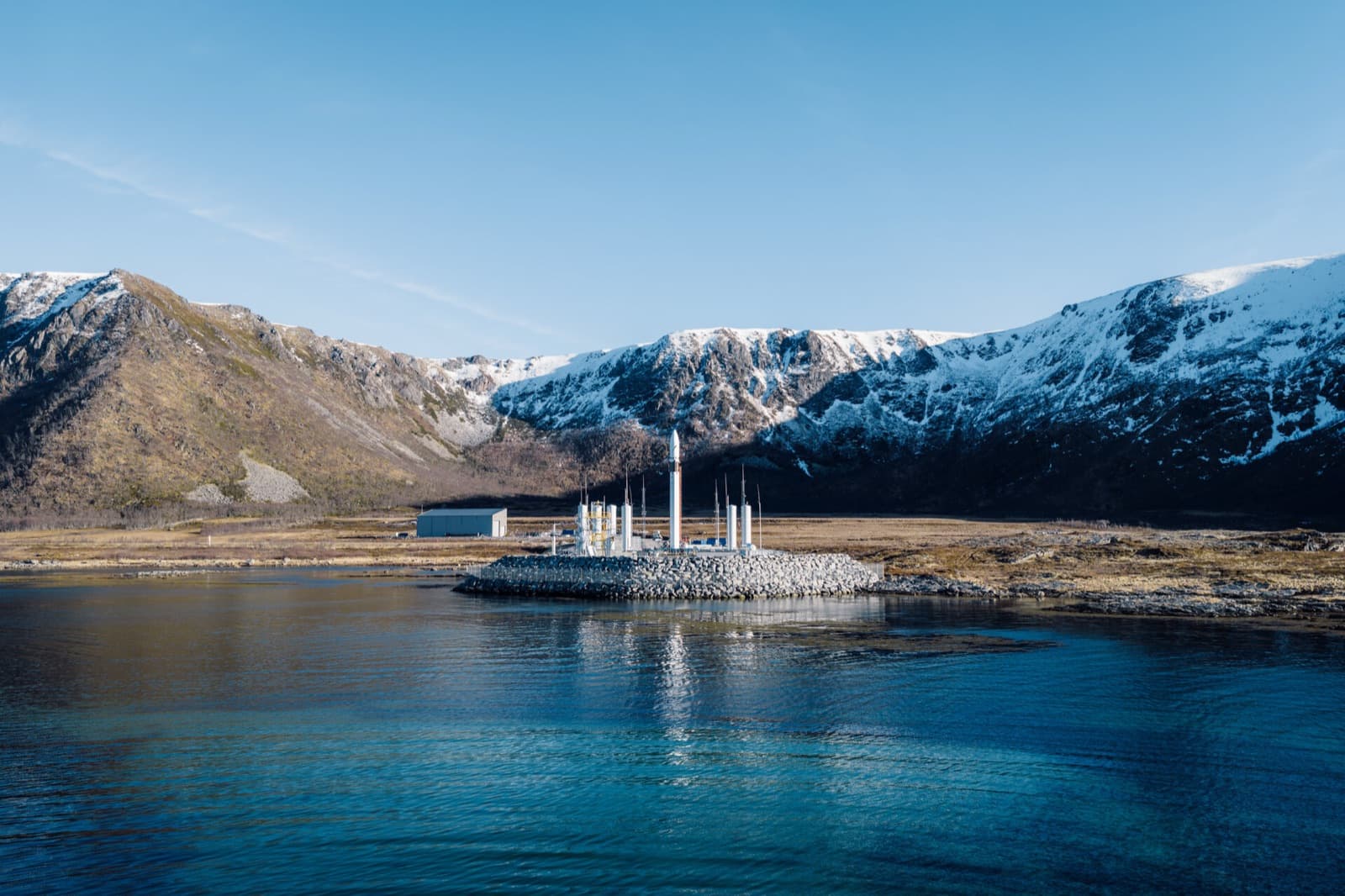
Isar Aerospace is a Munich-area launch company that on September 5, 2026 became the first privately developed European rocket maker to reach orbit, and the first to do so from continental Europe. Founded in 2018 by Daniel Metzler, Josef Fleischmann and Markus Brandl out of the Technical University of Munich's WARR student rocketry team, it builds Spectrum, a 28-meter, two-stage propane/liquid-oxygen small-lift vehicle with nine Aquila first-stage engines and a restartable vacuum Aquila, sized for 1,000 kg to low Earth orbit or 700 kg to sun-synchronous orbit. Mission Onward and Upward lifted off from the company's dedicated pad at Andoya Spaceport, Norway, at 22:12 CEST on its second flight, circularized into a roughly 500 km sun-synchronous orbit, and deployed five customer CubeSats; Isar said on September 9 that most of those satellites had already established contact. The debut flight, Going Full Spectrum on March 30, 2025, lost attitude control about 30 seconds after liftoff after a vent valve opened unexpectedly. A June 9, 2026 Series D of EUR 270 million took cumulative funding to roughly EUR 870 million. ESA signed a EUR 197.8 million European Launcher Challenge contract on August 27, 2026, and the September 5 flight made Isar the first ELC challenger to clear the orbital-launch milestone. Vehicles three through seven are in production at a new 40,000 square meter Parsdorf/Vaterstetten factory designed for up to 40 Spectrum vehicles a year. Chief commercial officer Stella Guillen said on September 15 that 2028 launch capacity is fully contracted and more than double the 2027 plan of at least four flights, that a third flight would follow soon, and that Isar signed five more dedicated Spectrum missions with SEOPS for 2028-2030, taking that relationship to six launches. Defense-related inbound demand has flipped from a mostly civil book a year earlier to about 60% by June 2026 and as high as 70% in CEO comments after the orbital flight. A 10-year, $112.5 million dedicated-pad deal with Maritime Launch Services at Spaceport Nova Scotia, whose statement of work closed on September 14, 2026, targets first Canadian Spectrum flights in 2028. On September 21, 2026 co-founder Josef Fleischmann handed over COO/CTO duties to found Bavaria Instruments; Can Araz, formerly VP Spectrum, became CTO, with Daniel Metzler remaining CEO.
Main Products
What's Next
Vehicles 3-7 are already in production. Reuters reported on September 15 that Isar intends to complete its third flight soon after the September 5 orbital debut. FAZ, citing Metzler after the launch, said the third vehicle was in final preparation and that flights four through seven should go in 2027, all from Norway.
Run at least four Spectrum flights in 2027
CCO Stella Guillen said on September 15 that Isar is scheduling at least four flights next year, the first year that is supposed to look like a commercial cadence rather than a test program. 2028 capacity is already fully contracted and described as a little more than double that 2027 plan. Meeting the demand the company says it is seeing would take nearly 200 Spectrum-class vehicles in 2028, a figure Guillen gave without a matching backlog number.
Launch Planet's German-built Pelican satellite
On July 2, 2026 Planet Labs Germany booked a next-generation Pelican Earth-observation satellite, to be assembled at Planet's new Berlin factory, on Spectrum from Andoya, billed as the first German-built satellite on a German-built rocket. The agreement aimed for a first launch within 12 months, with the vehicle 'currently scheduled as early as late 2026.' That late-2026 window is now tight against the just-completed qualification flight.
Launch Astroscale's ADRAS-J2 debris-removal spacecraft
Astroscale Japan selected Spectrum on September 1, 2026 to launch ADRAS-J2, the JAXA Commercial Removal of Debris Demonstration follow-on that will try to capture and deorbit a roughly 3-ton H-IIA upper stage. Target window is 2027-2028 from Andoya. It is Isar's second Astroscale-group booking after ELSA-M (Astroscale FY2028 or later). Spectrum's September 5 orbital debut is the flight heritage Astroscale had said it wanted first.
First Spectrum launch from Spaceport Nova Scotia
The 10-year, $112.5 million dedicated-pad deal with Maritime Launch Services closed its statement of work on September 14, 2026, after a two-week extension from the original September 1 deadline. Pad handover is still due November 1, 2026, with additional spaceport infrastructure by December 31, 2027 and first orbital Spectrum flights targeted for 2028. SEOPS' five additional missions may use both Andoya and Nova Scotia.
Track Record
1 of 1 announced date hit
Reach orbit on Spectrum's qualification flight
Target January 2026 · Resolved Sep 5, 2026
Mission Onward and Upward was first targeted no earlier than January 21, 2026, then slipped through a pressurization-valve scrub, a boat in the exclusion zone, a COPV leak, off-nominal fluid-system behavior in June, and a wind delay on September 4. Spectrum reached a sun-synchronous orbit from Andoya at 22:12 CEST on September 5, 2026, circularized, and deployed five CubeSats. Isar said on September 9 that most of the satellites had established contact. It is recorded as a hit against the original early-2026 target, after multiple slips.
Operations & Revenue
One successful orbital flight, from Isar's dedicated pad at Andoya Spaceport, Norway, the first orbital spaceport on the European mainland. Vehicles 3-7 are in production; Reuters reported a third flight would follow soon after September 5, with at least four missions scheduled for 2027. The company is moving into a combined headquarters and factory in Parsdorf/Vaterstetten designed for about 40 vehicles a year. A 10-year dedicated complex at Spaceport Nova Scotia, statement of work closed September 14, 2026, targets first Spectrum flights in 2028. The launch page still lists Kourou, where CNES selected Isar for the former Diamant pad in 2022; start of operations there has slipped to 2027 at the earliest. Engine testing is run from Kiruna/Esrange, Sweden. Legal form is Isar Aerospace SE, with subsidiaries in Sweden, France, and Canada. Company boilerplate still says 400+ people across 5 countries; FAZ cited 500 after the orbital flight, targeting 600 by year-end 2026.
Revenue Streams
Dedicated small-satellite launch
The intended core business: dedicated Spectrum flights that let a customer pick the orbit and the date rather than wait for a rideshare slot. Offerings are Dedicated, Lead, and Rideshare. Commercial cadence is still ramping after the September 2026 qualification flight; 2028 dedicated capacity is already described as fully contracted.
Institutional and ESA launch services
ESA Boost! funded the first two Spectrum flights. The August 2026 European Launcher Challenge contract is worth EUR 197.8 million as milestones are met. DLR's microlauncher competition selected the Flight 2 payloads. NOSA has booked two Arctic Ocean Surveillance satellites through 2028. These are the first paying institutional customers converting Europe's launcher-policy shift into contracts.
Inbound demand flipped from mostly civil to about 60% defense-related by June 2026. Isar is named preferred launch partner for the Kongsberg/Hensoldt/Helsing European ISR constellation, partnered with TKMS on the Canadian Patrol Submarine Project as a sovereign-launch add-on, and hosted German defence minister Boris Pistorius at Ottobrunn in July 2026. The product is still Spectrum; the customer mix is increasingly military reconnaissance and communications.
Multi-launch rideshare (SEOPS and similar)
SEOPS has now booked six Spectrum missions, including five dedicated launches in 2028-2030 from Andoya and Nova Scotia under its Waymaker rideshare program. Earlier commercial agreements include Exotrail, EnduroSat, Airbus Defence and Space, and Spaceflight Inc. These are capacity reservations rather than a disclosed dollar backlog.
Key Metrics
- Employees
- 400+ (company, Sept 15 2026); FAZ reported 500 after the orbital debut, targeting 600 by year-end
- Est. Annual Revenue
- No public 2025 or 2026 revenue print. Launch service is only now converting from qualification to operations after the September 5, 2026 orbital debut. CCO Stella Guillen said on September 15 that 2028 launch capacity is fully contracted. Aviation Week reported in January 2026, before Spectrum had reached orbit, that Isar claimed a more than $10B business pipeline and several hundred million dollars of booked launch contracts; those figures have not been independently audited. Current revenue is still a mix of institutional contracts (ESA Boost!, ELC milestone funding, DLR microlauncher) and customer deposits rather than a disclosed commercial launch P&L.
- Total Raised
- ~EUR 870M after the June 2026 Series D (The Next Web); company homepage still lists EUR 500+ million, which predates the round
- Orbital Record
- 1 for 2: Flight 1 failed at T+30s on March 30, 2025; Flight 2 reached SSO and deployed five CubeSats on September 5, 2026
- 2027-2028 Cadence
- At least 4 flights scheduled for 2027; 2028 capacity fully contracted and more than double 2027, per CCO Stella Guillen on Sept 15, 2026
- Factory Capacity
- 40,000 m2 Parsdorf/Vaterstetten plant designed for up to 40 Spectrum vehicles a year; vehicles 3-7 already in production. FAZ reported Metzler is aiming to hit that 40-a-year rate from 2030
Timeline
On June 9, 2026 Isar closes a EUR 270 million Series D with new investors Island Green Capital and Molten Ventures alongside HV Capital, Lakestar, UVC Partners and KfW Capital. The Next Web puts cumulative funding at roughly EUR 870 million. The money funds the Parsdorf factory, a planned second pad at Spaceport Nova Scotia, and serial Spectrum production. Defense-related inbound demand has risen to about 60% of requests. Bloomberg had reported in March that the round was being discussed at about a EUR 2 billion valuation; close terms were not disclosed.
On July 2 Planet Labs Germany books a Pelican Earth-observation satellite, to be assembled in Berlin, on Spectrum as early as late 2026, billed as the first German-built satellite on a German-built rocket. On July 7 Isar and Maritime Launch Services sign a 10-year facilities-usage agreement for a dedicated Spectrum complex at Spaceport Nova Scotia, $3.75 million a quarter ($112.5 million over the base term) with a 30-month fee-waiver window after year one and first flights targeted for 2028. German defence minister Boris Pistorius tours Ottobrunn on July 23.
On August 27, 2026 ESA signs the first European Launcher Challenge contracts; Isar's award is EUR 197.8 million, funded mainly by Germany with Austria and Norway, the largest of the three initial awards. On September 1 Astroscale Japan books ADRAS-J2, JAXA's active debris-removal follow-on, on Spectrum from Andoya in a 2027-2028 window, Isar's second Astroscale-group contract after ELSA-M in March.
At 22:12 CEST on September 5, 2026, Spectrum lifts off from Andoya on Mission Onward and Upward, the first successful orbital launch of a privately developed European rocket and the first orbital launch from continental Europe. The two-stage vehicle reaches a sun-synchronous orbit near 500 km, completes a circularization burn, and deploys five CubeSats (CyBEEsat, TriSat-S, Platform 6, FramSat-1, SpaceTeamSat1) plus Dcubed's non-separable Let It Go experiment. Isar said on September 9 that most of the satellites had established contact and begun operations, and that the first stage completed a controlled descent into a designated Norwegian Sea corridor. ESA called it the first European Launcher Challenge orbital milestone.
On September 15, 2026 Isar signs five additional dedicated Spectrum launches with US rideshare operator SEOPS for 2028-2030 from Andoya and Spaceport Nova Scotia, taking the SEOPS relationship to six missions and bringing the 2028 manifest close to full. Reuters reported the same day that CCO Stella Guillen said 2028 capacity is fully contracted and 'a little bit more' than double the 2027 plan of at least four flights, that a third flight would follow soon after September 5, and that meeting current demand would take nearly 200 Spectrum-class vehicles in 2028. The Nova Scotia statement of work had been finalized on September 14.
On September 21, 2026 co-founder Josef Fleischmann hands over his COO/CTO operational role to found Bavaria Instruments, an in-orbit computing startup. Can Araz, with the company since founding and most recently VP Spectrum, becomes CTO. Patrick Adcock, VP Global Operations, leads production scaling. Daniel Metzler remains CEO.
Spectrum's debut, Mission Going Full Spectrum, lifts off from Andoya at 12:30 CEST on March 30, 2025, the first orbital launch attempt from continental Europe by a commercial company. About 30 seconds later a vent valve opens unexpectedly, the vehicle loses attitude control at the start of its roll maneuver, and the flight-termination system dumps it into the sea. The pad survives. An investigation completed within two months, reviewed with the Norwegian Civil Aviation Authority, drives software and environmental-margin changes for flight 2.
In June 2024 the NATO Innovation Fund leads a $70 million Series C extension, taking disclosed private capital above EUR 400 million. In May the company signs with VGP to build a 40,000 square meter headquarters and factory in Parsdorf/Vaterstetten, designed for serial Spectrum production. ESA Boost! adds a EUR 15 million contract in November.
In March 2023 Isar raises a $165 million Series C from 7-Industries, Bayern Kapital, Lombard Odier and existing investors. Andoya Spaceport is officially opened in November 2023, giving continental Europe its first orbital pad, built around Spectrum's requirements.
In January 2022 Isar wins the European Commission's EIC Horizon Prize for Low-Cost Space Launch and a EUR 10 million award. In July, CNES selects it as the first privately funded company to operate from the former Diamant pad at Europe's Spaceport in French Guiana, a low-latitude site that is still listed as planned and has since slipped.
In April 2021 Isar signs a 20-year deal with Andoya Space for exclusive use of the first orbital pad at the new Norwegian spaceport, covering sun-synchronous and polar inclinations from 87.4 to 108 degrees. Porsche SE takes a stake later that year as the company raises about $75 million.
Isar raises $17 million in Series A backing from Earlybird and Airbus Ventures, then $91 million (EUR 75 million) in Series B in December 2020 led by Lakestar with HV Capital. The capital funds in-house Spectrum and Aquila development rather than a government launcher contract.
Daniel Metzler, Josef Fleischmann and Markus Brandl found Isar Aerospace in March 2018, named after the river that runs through Munich, to build a privately funded European small-satellite launcher. Early angel backing included former SpaceX executive Bulent Altan, who later became chairman.
Funding
Cumulative disclosed raise · dated rounds